This upside down pear tart is the kind of dessert that looks fancy but feels comfortingly simple. Sweet pears melt into buttery caramel, all tucked under a flaky, golden crust. You flip it out of the pan and suddenly it’s a showstopper, glossy and fragrant.
It’s perfect for fall evenings, holiday dinners, or any time you want something special without a lot of fuss. Serve it warm, add a scoop of vanilla ice cream, and watch it disappear.
Table of Contents
What Makes This Upside Down Pear Tart
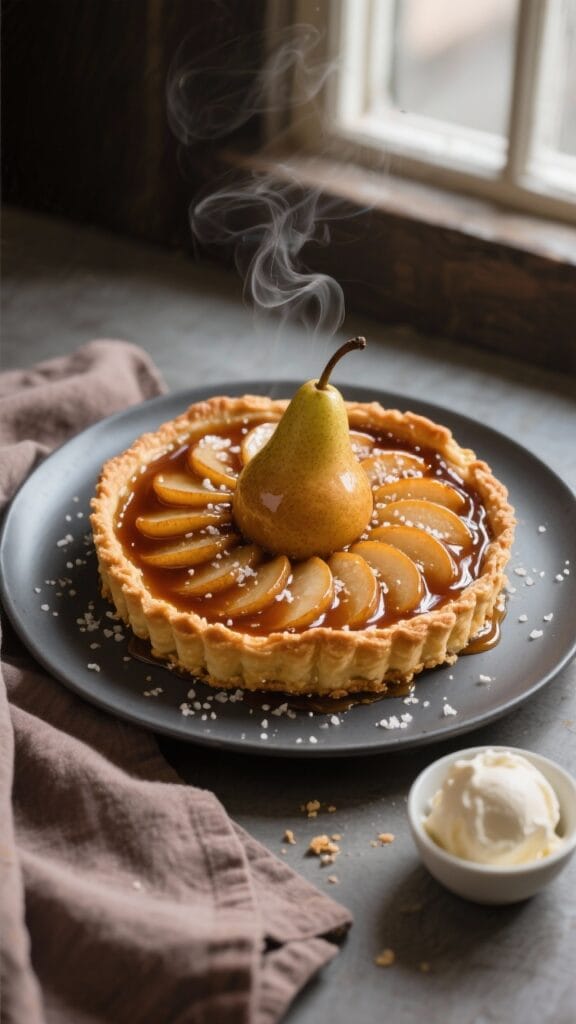
This tart delivers the same drama as a classic tarte Tatin, but with a more relaxed approach. You don’t need pastry school skills—just a skillet, a good pear, and a sheet of puff pastry.
The caramel forms right in the pan, soaking the fruit and creating that gorgeous sheen after flipping. It’s versatile too: swap spices, change the pears, or use shortcrust instead of puff. The best part?
It tastes just as good at room temperature as it does warm from the oven.
Shopping List
- Pears: 5–6 medium firm-ripe pears (Bosc, Anjou, or Comice work well)
- Puff pastry: 1 sheet, thawed (store-bought is perfect)
- Butter: 6 tablespoons (unsalted)
- Granulated sugar: 3/4 cup
- Brown sugar: 2 tablespoons (light or dark)
- Vanilla extract: 1 teaspoon
- Ground cinnamon: 1/2 teaspoon
- Ground cardamom or nutmeg (optional): 1/4 teaspoon
- Lemon juice: 1 tablespoon (to keep pears bright)
- Salt: Pinch
- Egg wash (optional): 1 egg beaten with 1 teaspoon water
- Flour (for rolling): Light dusting if needed
- Vanilla ice cream or whipped cream (optional): For serving
Instructions
- Prep the oven and pastry. Heat your oven to 400°F (200°C). If your puff pastry is frozen, thaw it according to package directions. Keep it chilled until ready to use so it bakes flaky.
- Peel and prep the pears. Peel, halve, and core the pears.
Slice each half into 3–4 thick wedges. Toss gently with the lemon juice to prevent browning.
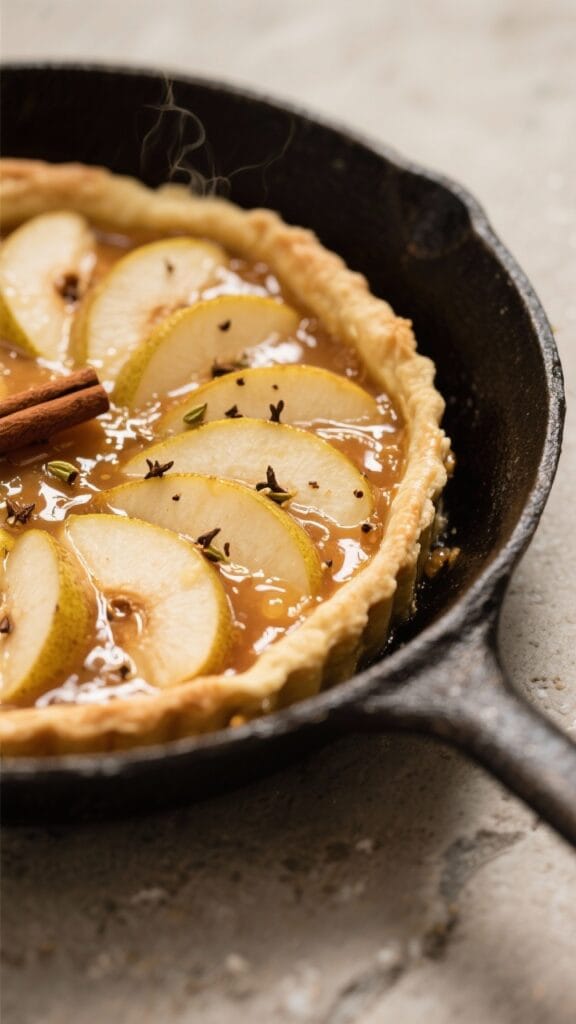
- Make the caramel base. In a 10-inch oven-safe skillet (cast iron works great), melt the butter over medium heat. Add the granulated sugar and brown sugar.
Cook, stirring occasionally, until the mixture looks glossy, thick, and starting to turn golden, about 3–5 minutes. Stir in vanilla, cinnamon, cardamom (if using), and a pinch of salt.
- Arrange the pears. Remove the pan from the heat. Nestle pear slices into the caramel in a circular pattern, slightly overlapping.
Pack them snugly; they’ll shrink a bit as they cook.
- Cook the pears briefly. Return the pan to medium heat and cook 5–7 minutes. The pears should soften slightly and release a bit of juice, enriching the caramel. If the caramel bubbles aggressively, lower the heat.
- Prepare the pastry lid. On a lightly floured surface, roll the puff pastry to a circle just larger than your skillet.
You can trace the pan with a knife and cut a round, or just trim the corners. Use a fork to prick the pastry a few times to let steam escape.
- Top and tuck. Lay the pastry over the pears. Use a spoon or spatula to tuck the edges down around the fruit, creating a snug seal.
Brush lightly with egg wash if you want extra gloss.
- Bake until golden. Transfer the skillet to the oven and bake 25–30 minutes, until the pastry is puffed and deep golden brown. You should see some caramel bubbling around the edges.
- Rest, then flip. Let the tart rest 5–10 minutes. Place a large plate or platter over the skillet.
Using oven mitts, flip the whole thing carefully and lift off the pan. The pears should be on top, glossy and caramel-coated. If any fruit sticks, just nudge it back into place.
- Serve warm. Slice and serve as is, or with vanilla ice cream or lightly sweetened whipped cream.
A sprinkle of flaky salt makes the caramel pop.
How to Store
Let the tart cool completely, then cover and refrigerate for up to 3 days. For best texture, warm slices in a 300°F (150°C) oven for 10 minutes or in a skillet over low heat to re-crisp the pastry. You can also freeze the baked tart (well wrapped) for up to 1 month.
Thaw overnight in the fridge and refresh in the oven before serving. Avoid microwaving if you want the pastry to stay flaky.
Health Benefits
- Pears provide fiber. They’re a good source of soluble fiber, which supports digestion and helps keep you full.
- Natural sweetness. Ripe pears bring a lot of flavor, so you can sometimes use a little less sugar without losing taste.
- Spices add more than aroma. Cinnamon and cardamom offer antioxidants and warmth without extra calories.
- Portion-friendly. A small slice goes a long way because the caramel and fruit are satisfying. Pair with yogurt instead of ice cream for a lighter option.
Common Mistakes to Avoid
- Using overripe pears. Too-soft fruit turns mushy and can break apart during flipping.
Choose pears that give slightly at the stem, not all over.
- Skipping the rest before flipping. Letting the tart sit a few minutes helps the caramel settle and reduces the risk of burns or broken fruit.
- Underbaking the pastry. Pale pastry gets soggy. Bake until it’s a deep golden color for a crisp top and better contrast with the soft pears.
- Too much liquid. If pears release a lot of juice, your caramel can thin out. Cook the pears in the caramel a few minutes to reduce excess moisture before adding the pastry.
- Forgetting to vent the pastry. A few fork pricks help steam escape, preventing a soggy underside.
Variations You Can Try
- Ginger and honey. Add 1 tablespoon grated fresh ginger to the caramel and replace 2 tablespoons of sugar with honey.
- Almond twist. Sprinkle 1/3 cup sliced almonds over the caramel before arranging the pears.
Add a few drops of almond extract.
- Shortcrust top. Use a round of pie dough instead of puff pastry for a sturdier, more classic tarte Tatin feel.
- Pear and cranberry. Tuck 1/2 cup fresh or frozen cranberries between the pears for tart bursts of color and flavor.
- Boozy caramel. Stir in 1–2 tablespoons Calvados, bourbon, or rum after the caramel turns golden. Let the alcohol cook off for a minute.
- Brown butter. Brown the butter first for a nutty depth that pairs beautifully with pears.
FAQ
Which pears are best for an upside down tart?
Bosc and Anjou are reliable because they hold their shape and don’t turn mushy. Comice can work too if they’re just shy of fully ripe.
Avoid very soft Bartletts or super-ripe fruit.
Can I make it ahead?
Yes. You can cook the pears in caramel earlier in the day, cool them in the pan, top with pastry, and refrigerate. Bake just before serving.
Or bake the whole tart and rewarm in the oven for 10–15 minutes at 300°F (150°C).
What if I don’t have an oven-safe skillet?
Make the caramel in a regular saucepan, pour it into a 9- or 10-inch cake pan, arrange the pears, and top with pastry. Bake as directed. To flip, run a knife around the edge first.
How do I keep the caramel from burning?
Use medium heat and watch for color changes.
Once it turns light amber and the sugar dissolves, lower the heat if needed and keep it moving gently. The residual heat will keep cooking it, so pull it a touch early rather than too late.
Can I reduce the sugar?
You can shave off a couple of tablespoons without issues, especially if your pears are very sweet. Keep enough sugar to create a proper caramel; otherwise, the texture may be thin and the flip less glossy.
Is puff pastry the only option?
No.
Pie dough, rough puff, or even phyllo (layered with a little butter and sugar) can work. Puff pastry is easiest and delivers that dramatic puff and crispness.
Why did some pears stick to the pan?
Caramel is sticky—totally normal. If a few slices cling to the skillet, lift them out and set them back on top.
Next time, let the tart rest a few minutes more before flipping, and ensure the pan is well-coated with caramel.
What can I serve with it?
Vanilla ice cream is classic. Whipped cream, crème fraîche, or a dollop of Greek yogurt also balance the sweetness. A drizzle of salted caramel or a dusting of powdered sugar makes it extra pretty.
In Conclusion
This upside down pear tart proves you don’t need complicated steps to get a bakery-worthy dessert.
With caramel, good fruit, and a sheet of pastry, you get layers of texture and warm, spiced flavor. It’s easy to adapt, simple to serve, and always the first empty plate at the table. Keep a box of puff pastry in the freezer, and you’re never far from something special.
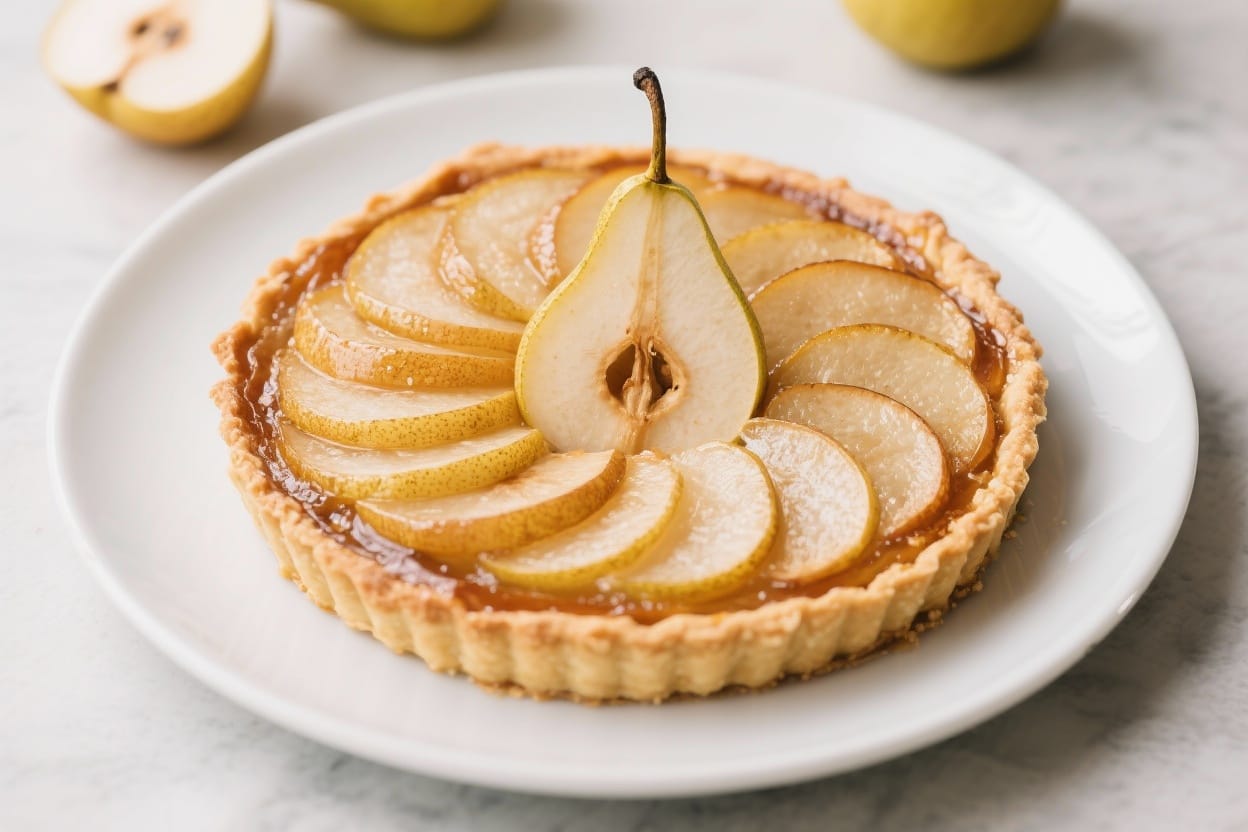
Upside Down Pear Tart – A Cozy, Caramelly Dessert
Ingredients
Method
- Prep the oven and pastry. Heat your oven to 400°F (200°C). If your puff pastry is frozen, thaw it according to package directions. Keep it chilled until ready to use so it bakes flaky.
- Peel and prep the pears. Peel, halve, and core the pears.Slice each half into 3–4 thick wedges. Toss gently with the lemon juice to prevent browning.
- Make the caramel base. In a 10-inch oven-safe skillet (cast iron works great), melt the butter over medium heat. Add the granulated sugar and brown sugar.Cook, stirring occasionally, until the mixture looks glossy, thick, and starting to turn golden, about 3–5 minutes. Stir in vanilla, cinnamon, cardamom (if using), and a pinch of salt.
- Arrange the pears. Remove the pan from the heat. Nestle pear slices into the caramel in a circular pattern, slightly overlapping.Pack them snugly; they’ll shrink a bit as they cook.
- Cook the pears briefly. Return the pan to medium heat and cook 5–7 minutes. The pears should soften slightly and release a bit of juice, enriching the caramel. If the caramel bubbles aggressively, lower the heat.
- Prepare the pastry lid. On a lightly floured surface, roll the puff pastry to a circle just larger than your skillet.You can trace the pan with a knife and cut a round, or just trim the corners. Use a fork to prick the pastry a few times to let steam escape.
- Top and tuck. Lay the pastry over the pears. Use a spoon or spatula to tuck the edges down around the fruit, creating a snug seal.Brush lightly with egg wash if you want extra gloss.
- Bake until golden. Transfer the skillet to the oven and bake 25–30 minutes, until the pastry is puffed and deep golden brown. You should see some caramel bubbling around the edges.
- Rest, then flip. Let the tart rest 5–10 minutes. Place a large plate or platter over the skillet.Using oven mitts, flip the whole thing carefully and lift off the pan. The pears should be on top, glossy and caramel-coated. If any fruit sticks, just nudge it back into place.
- Serve warm. Slice and serve as is, or with vanilla ice cream or lightly sweetened whipped cream.A sprinkle of flaky salt makes the caramel pop.