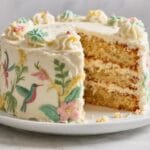
In my 40 years of professional baking, I have seen many trends come and go, but nothing carries the timeless grace of a Vintage Cake. Known formally as the “Lambeth Method,” this style of over-piping creates a regal, Victorian-inspired look that is currently taking the world by storm. If you are looking to create that stunning Vintage Cake blanc nacré (pearlescent white cake) featured in your favorite aesthetic feeds, you’ve come to the right place. I’m going to walk you through every step to ensure your cake is as delicious as it is beautiful.
Table of Contents
Why You’ll Love This Vintage Cake Recipe
Making a vintage style cake at home might seem intimidating, but I’ve refined this process over decades to make it accessible for you, my dear reader. Here is why this recipe will become your new go-to for special occasions:
- Timeless Aesthetic: The intricate piping and fresh cherry toppers create a nostalgic look that impresses every guest.
- The “Nacré” Secret: I will teach you how to achieve that expensive-looking pearlescent finish using simple edible luster dust.
- Superior Stability: We use a specialized Swiss Meringue Buttercream that holds its shape for complex piping without being cloyingly sweet.
- Perfect for Every Event: Whether it’s a coquette-themed birthday, a bridal shower, or a “just because” Sunday, this cake is the ultimate centerpiece.
- Foolproof Texture: My white cake base is moist, fine-grained, and sturdy enough to handle the weight of heavy decorative piping.
Ingredients Needed For Amazing Vintage Style Cake for Your Celebration
For this Vintage Cake, quality is everything. I recommend using high-quality European-style butter for the best flavor and stability.

For the Vanilla Bean White Cake
- 3 cups All-Purpose Flour: Sifted twice for a delicate crumb.
- 2 cups Granulated Sugar: Fine caster sugar works best here.
- 1 tablespoon Baking Powder: Ensure it is fresh for maximum lift.
- ½ teaspoon Salt: To balance the sweetness.
- 1 cup Unsalted Butter: Softened to room temperature (about 65°F).
- 5 Large Egg Whites: Room temperature (save the yolks for a lemon curd!).
- 1 cup Whole Milk: Room temperature for even mixing.
- 2 teaspoons Vanilla Bean Paste: For those beautiful tiny black flecks.
For the Pearlescent Swiss Meringue Buttercream
- 5 Large Egg Whites: Clean, grease-free bowl is mandatory.
- 1 ½ cups Granulated Sugar: To be dissolved in the whites.
- 2 cups Unsalted Butter: Cubed and slightly cool (not mushy).
- 1 teaspoon Clear Vanilla Extract: Keeps the frosting ultra-white.
- Edible Pearl Luster Dust: For that blanc nacré finish.
- High-Proof Vodka or Lemon Extract: To mix with the dust for painting/spraying.
Decor
- Fresh Cherries with Stems: Pat them dry to prevent bleeding.
- Silver Dragees (optional): To accent the piped swags.
How to Make the Ultimate Vintage Cake
Follow these steps closely. In professional baking, the “Why” is just as important as the “How.”

Step 1: Prepare the Cake Bases
Preheat your oven to 350°F (175°C). Grease and flour three 6-inch round cake pans. Why? Using 6-inch pans gives the cake the classic “tall and narrow” vintage silhouette. Cream the butter and sugar for at least 5 minutes until pale and fluffy. This incorporates air, ensuring your cake isn’t dense.
Step 2: Incorporate Dry and Wet Ingredients
Alternate adding your sifted dry ingredients and the milk/vanilla mixture to the creamed butter. Start and end with the dry ingredients. Fold in the whipped egg whites last. Why? Folding preserves the air bubbles, resulting in a cloud-like texture. Bake for 25-30 minutes or until a toothpick comes out clean.
Step 3: Master the Swiss Meringue Buttercream
Whisk egg whites and sugar over a double boiler until the sugar is dissolved (160°F). Transfer to a stand mixer and whip to stiff, glossy peaks. Once the bowl is cool to the touch, add the butter one cube at a time. If it looks curdled, keep whipping! It will come together into a silk-smooth frosting.
Step 4: The Crumb Coat and Chilling
Stack your layers with a thin layer of buttercream. Apply a “crumb coat”—a thin layer of frosting to seal in crumbs—and chill for 30 minutes. Why? A cold, firm base is essential for the heavy piping we are about to do.
Step 5: Piping the Vintage Swags
Using a Wilton 4B or 32 tip, create the bottom border with small “shell” motions. For the side swags (the “U” shapes), use a small leaf tip or a petal tip (Wilton 104). Lightly mark your cake with a round cookie cutter first to ensure your swags are even. Why? Symmetry is the hallmark of the Lambeth style.
Step 6: The Pearlescent Finish (Le Secret Nacré)
Once the piped decorations have set in the fridge for 20 minutes, mix your pearl luster dust with a few drops of vodka. Using a food-only spray pump or a very soft brush, lightly mist the cake. The alcohol evaporates, leaving behind a stunning, shimmering pearlescent white glow.
Step 7: The Cherry on Top
Place your fresh, stemmed cherries along the top border. Space them evenly to match the piped peaks.
Expert Tips for Success
- Temperature Control: If your hands are warm, the buttercream will melt in the piping bag. Wrap the bag in a cold, damp paper towel if needed.
- The “White” Secret: To get the frosting truly white (removing the yellow butter tint), add the tiniest drop of purple food coloring. Purple neutralizes yellow!
- Don’t Rush the Cooling: Never frost a warm cake. It will slide right off, and your intricate piping will be lost.
Serving and Storage Vintage Cake Decorating Tips
- Presentation: Serve on a glass pedestal stand to enhance the vintage vibe.
- Storage: This cake keeps well in the fridge for up to 3 days. However, for the best flavor, let it sit at room temperature for 1 hour before serving so the buttercream softens.
- Freezing: You can freeze the un-decorated layers wrapped tightly in plastic wrap for up to a month.
Frequently Asked Questions
Can I use American Buttercream for a vintage cake?
You can, but it is often too sweet and develops a “crust.” For the intricate Vintage Cake blanc nacré, Swiss Meringue is superior because it remains smooth and allows for more detailed piping.
How do I make the cherries stay fresh?
Place the cherries on the cake just before serving. If they sit too long in the fridge, the stems may brown and the juice might leak into the white frosting.
What piping tips do I need for a Lambeth cake?
The most common are Wilton 4B (star), 104 (petal), and 3 (round). These allow you to create the ruffles, shells, and dots that define the style.
Conclusion
Creating a Vintage Cake is a labor of love that rewards you with the most photogenic and delicious dessert imaginable. In my 40 years in the kitchen, few things bring as much joy as seeing a student master the “shell” pipe for the first time. This recipe combines the best of old-world charm with modern pearlescent techniques.
I want to hear from you! What occasion are you baking this for? A birthday, a wedding, or a weekend treat? Let me know in the comments below, and don’t forget to leave a star rating if you loved the “pearlescent” tip!

Vintage Cake blanc nacré with Cherries
Ingredients
Method
- Preheat oven to 350°F and prepare three 6-inch pans with grease and flour.
- Cream butter and sugar for 5 minutes until light and fluffy to ensure a fine crumb.
- Mix dry and wet ingredients alternately, ending with dry, then fold in egg whites.
- Bake for 25-30 minutes. Cool completely before frosting.
- Prepare Swiss Meringue Buttercream by heating whites and sugar, then whipping with butter.
- Apply a crumb coat, chill, then pipe intricate Lambeth swags using star and petal tips.
- Mix luster dust with vodka and mist the cake for a pearlescent finish. Top with cherries.