There is something truly magical about the marriage of tangy sourdough and the bright, zesty pop of citrus and berries. If you have been looking for a way to elevate your bread-baking game beyond the standard rustic loaf, this Lemon Blueberry Sourdough Bread is the ultimate project. It combines the artisanal crust and airy crumb of a traditional sourdough with the dessert-like qualities of a blueberry pastry.
Whether you are a seasoned “sourdough sorcerer” or a beginner looking to experiment with inclusions, this recipe provides a foolproof method for achieving that beautiful purple-marbled crumb and vibrant lemon aroma without compromising the structure of your loaf.
Table of Contents
Why You’ll Love This Lemon Blueberry Sourdough Bread
- The Flavor Profile: The natural acidity of the sourdough starter complements the tart lemon zest and sweet-tart blueberries perfectly.
- Stunning Aesthetics: When the berries burst during baking or lamination, they create deep purple swirls that make every slice look like a piece of edible art.
- Textural Contrast: You get a thick, crackly crust on the outside with a soft, pillowy, and moist interior.
- Versatility: This bread makes the world’s best French toast, but it is equally delicious toasted with a thick layer of salted butter or cream cheese.
Ingredients
For the Sourdough Dough
- 100g Active Sourdough Starter (bubbly and fed)
- 350g Warm Water (filtered)
- 500g Bread Flour (high protein for better lift)
- 10g Fine Sea Salt
For the Flavor Inclusions
- 150g Fresh Blueberries (washed and dried thoroughly)
- 2 tbsp Organic Lemon Zest (approx. 2 large lemons)
- 25g Granulated Sugar or Honey (optional, to balance the tartness)
- 1 tsp Lemon Extract (optional, for extra punch)
Instructions
1. The Premix and Autolyse
In a large glass bowl, whisk together your active starter and warm water until the starter is mostly dissolved and the water looks milky. Add the bread flour and stir with a dough whisk or your hands until no dry flour remains. Cover with a damp cloth and let it rest for 30–45 minutes. This “autolyse” period allows the flour to fully hydrate, making the dough easier to work with.
2. Adding Salt and Initial Folds
Sprinkle the sea salt over the top of the dough. Using wet hands, reach under the dough, pull it up, and fold it over itself. Rotate the bowl and repeat this 4–5 times. This is your first set of “stretch and folds.” Let the dough rest for 30 minutes.
3. Bulk Fermentation and Inclusions
This is where the magic happens. Over the next 2.5 hours, you will perform three more sets of stretch and folds every 30 minutes. During the second set of folds, gently fold in your lemon zest and sugar. During the third set, carefully laminate or fold in the blueberries. Be gentle; you want some berries to stay whole while others might slightly burst to create that signature purple swirl.
4. Shaping the Loaf
Once the dough has grown by about 50% and feels full of air, gently turn it out onto a lightly floured surface. Fold the edges into the center to create tension, then flip it over. Use your hands to tension the dough into a tight boule (round) or batard (oval). Place the dough upside down into a floured banneton basket.
5. Cold Proof
Cover the banneton with a plastic bag or a reusable cover and place it in the refrigerator for 12 to 18 hours. This cold proofing stage develops the deep sourdough flavor and makes the dough easier to score before baking.
6. Bake and Serve
Preheat your Dutch oven in the oven at 450°F (230°C) for 45 minutes. Carefully flip the cold dough onto parchment paper, score the top with a sharp lame, and lower it into the Dutch oven. Bake with the lid on for 20 minutes, then remove the lid and bake for another 20–25 minutes until the crust is a deep golden brown and the internal temperature reaches 205°F. Allow it to cool for at least 2 hours before slicing to set the crumb.
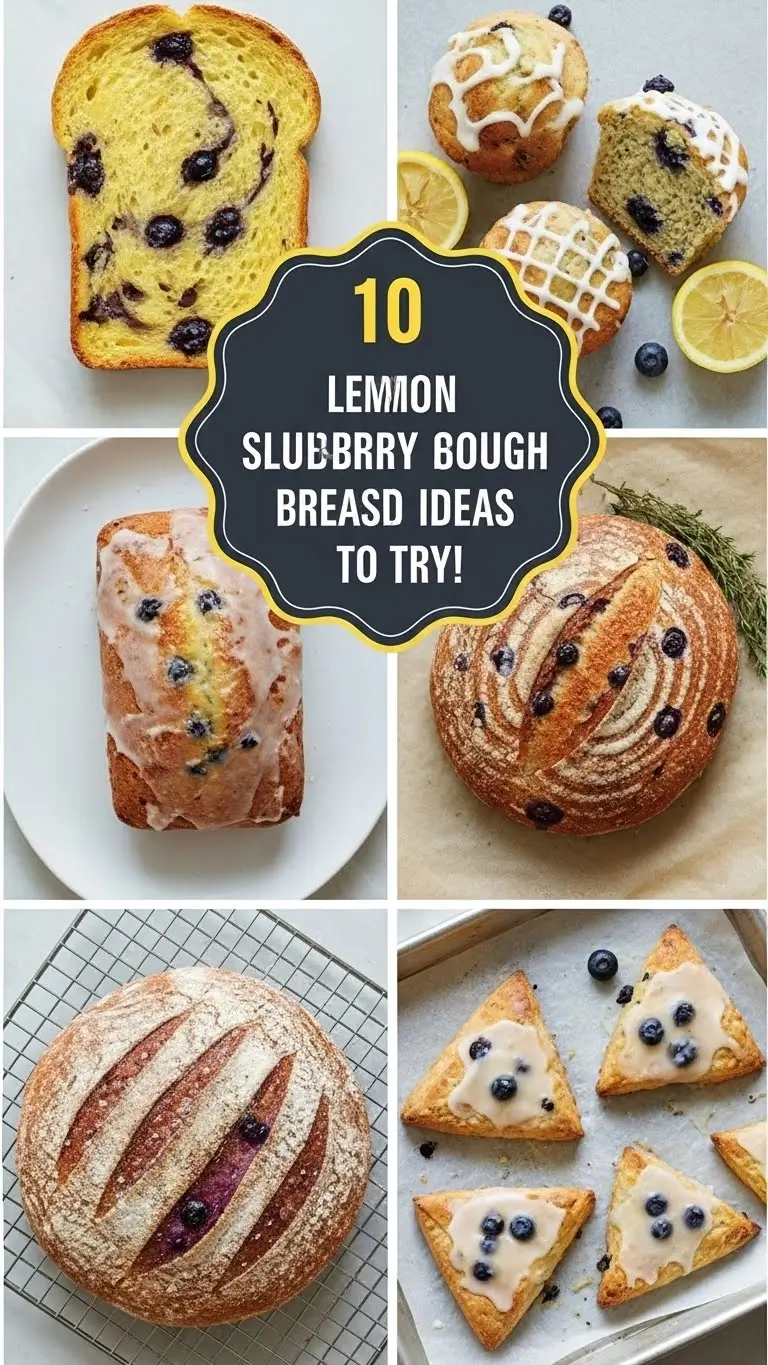
10 Lemon Blueberry Sourdough Ideas to Try!
If you want to branch out from the classic boule, here are ten creative ways to use this flavor profile in your sourdough baking:
- The Glazed Artisan Boule: Top your finished loaf with a simple lemon juice and powdered sugar glaze.
- Sourdough Sandwich Swirl: Bake the dough in a Pullman loaf pan for perfectly square slices.
- Lemon Blueberry Sourdough Scones: Use sourdough discard to make flaky, buttery scones.
- Blueberry Sourdough Focaccia: Dimple the dough deeply and nestle lemons and berries into the pockets.
- White Chocolate Inclusions: Add white chocolate chips along with the blueberries for a creamy sweetness.
- Dried Blueberry Infusion: Use dried blueberries soaked in lemon juice for a more concentrated flavor.
- Sourdough Muffins: A quick way to use sourdough discard with a lemon-sugar streusel topping.
- Lavender Lemon Blueberry: Add 1 tsp of culinary lavender for a floral, sophisticated twist.
- Dutch Crunch Topping: Apply a rice flour paste to the top before baking for a “tiger bread” texture.
- The “Purple” Loaf: Smash half the blueberries into the water at the start to dye the entire crumb deep purple.
Expert Tips for Success
- Dry Your Berries: If using fresh blueberries, ensure they are bone-dry after washing. Excess moisture can create “gum spots” in the crumb.
- Zest Matters: Use a microplane for the lemon zest. You want tiny particles that distribute the oil evenly throughout the dough rather than large chunks of peel.
- Don’t Over-Bulk: Fruit-filled doughs can sometimes ferment faster because of the natural sugars. Keep a close eye on the dough’s volume; if it looks jiggly and has bubbles on the surface, it’s ready.
Variations
- Vegan Option: This recipe is naturally vegan! Just ensure you use organic sugar or maple syrup as your sweetener.
- Frozen Berries: You can use frozen blueberries, but do not thaw them first. Fold them in frozen to prevent them from turning the entire dough into a muddy grey color.
- The “Double Lemon”: Add 1/2 tsp of lemon extract to the water for a bakery-style aroma that fills the whole house.
Frequently Asked Questions (FAQ)
Can I use sourdough discard? For the main artisan loaf, you need an active starter for the lift. However, you can use discard for the scone or muffin variations mentioned in the “10 Ideas” section.
How do I prevent the blueberries from sinking? In sourdough, the structure is strong enough that berries won’t “sink” like they do in cake batter. However, distributing them during the lamination phase (stretching the dough flat and sprinkling berries) ensures even distribution.
Why is my bread purple? That is the best part! The anthocyanins in the blueberries react with the acidity of the sourdough, often turning the dough shades of blue, purple, or even pink.
10 Lemon Blueberry Sourdough Bread
Ingredients
Method
- Mix the active starter and water in a large bowl. Add flour and mix until a shaggy dough forms. Rest for 45 minutes.
- Add salt and perform the first set of stretch and folds. Let rest for 30 minutes.
- Perform 3 more sets of folds every 30 minutes, gently adding the lemon zest, sugar, and blueberries during the 2nd and 3rd sets.
- Shape the dough into a tight boule and place in a floured banneton. Cold proof in the fridge for 12-18 hours.
- Preheat Dutch oven to 450°F. Score the dough and bake for 20 minutes with the lid on.
- Remove lid and bake for another 20-25 minutes. Cool completely before slicing.