No-yeast oat bread is what to make when you want something warm to toast and only have an hour. Grind rolled oats into flour, stir in yogurt and a couple of eggs, and bake the batter in a small loaf pan. The crumb is moist and compact, with a soft, nutty flavor that goes well with both salted butter and jam.
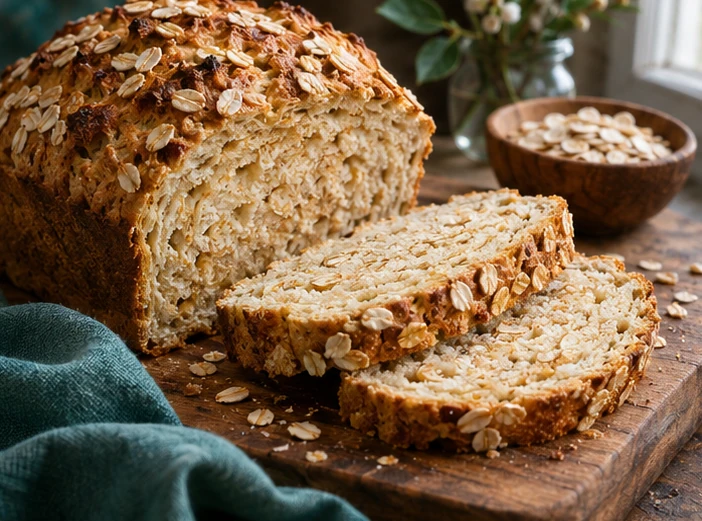
This is a quick bread in an eight-inch pan, so it will bake into a low loaf. Its crumb will feel different from wheat sandwich bread. There is no kneading and no point where the dough needs to rise before it goes in the oven. Baking powder gives the batter some lift, while eggs and finely ground oats give it enough structure to cut into slices after it cools.
Weigh the oats before grinding
Old-fashioned rolled oats are easy to use here. Set a small bowl on a scale and weigh out 170 grams. Then pulse them in a blender or food processor until they look like coarse whole-grain flour. Pause at intervals to move the flour away from the sides. Oats can hide a few unground flakes under the blades, so shake out the flour onto a plate if you want to see whether it is evenly ground.
Ready-made oat flour works at the same weight and makes the batter a little smoother. Steel-cut oats are too hard to grind evenly in many home blenders. Flavored instant packets bring extra sugar and starch, so choose plain oats. If you cook for someone who must avoid gluten, check that your oats and baking powder are labeled for their needs.
Check the yogurt and pan
Use plain whole-milk yogurt with a consistency that pours off a spoon slowly. Greek yogurt can work if you loosen it with a little milk before weighing it. A very thick yogurt gives less available water for the oat flour. A very thin yogurt may leave the center softer than the edges when the loaf is baked. If you are adapting the bread, check the batter texture before it goes into the pan.
Use an eight-by-four-inch loaf pan if you have one. An 8½-by-4½-inch pan will make the loaf a little lower and may shave a few minutes off the bake. Line the bottom and long sides with parchment so you have a handle to lift it. The batter should fill only part of the pan and should look like a thick muffin batter after mixing. Smooth the top gently with the back of a spoon before baking.
Mix lightly and bake until the center sets
Beat the eggs, yogurt and olive oil in a bowl until no separate streaks of oil remain. Stir the ground oats, baking powder and salt together in a second bowl. Add the wet mixture to the flour and fold until you stop seeing dry patches. A few small lumps are fine. If the batter clings to the spoon like a dough, stir in water a teaspoon at a time until it falls in thick ribbons.
Put the pan in the fully heated oven promptly. Start checking around 30 minutes. The top should look dry and lightly browned, and a skewer in the middle should come out without wet batter. A few moist crumbs are fine. Give a stubborn center a few more minutes and tent the top loosely with foil if it is already well browned. A relatively thick loaf sometimes needs more time than the window in the card.
Cool before slicing or freezing
Let the bread sit in the pan for about ten minutes, then lift it onto a rack. The rack prevents steam from gathering around the bottom. Wait until the loaf feels cool before you slice it. Fresh oat bread can seem gummy if the center is still warm, even after a clean skewer test. A serrated knife works best and lets you cut thinner slices for toasting.
Keep cooled bread covered at room temperature for a day, or refrigerate it for up to three days. Freeze slices in an airtight bag with parchment between them. Toast from frozen in a regular toaster, checking that the cycle is long enough to heat the middle. The bread works well with honey and ricotta, a crisp egg, or as an open-faced lunch with cucumbers and cream cheese.
Frequently asked questions
Will the loaf rise like sandwich bread?
Expect a modest rise and a close crumb. A narrow pan gives the batter more height than a broad one.
Can I sprinkle oats on top?
Yes. Use a teaspoon or two of rolled oats, pressed lightly onto the wet surface before baking.
Can I swap baking soda for baking powder?
Stick with baking powder here. An equal amount of baking soda can change the rise and leave a metallic taste.
Recipe inspiration from Cooking Layer.
No-Yeast Oat Bread with Yogurt
Ingredients
Method
- Heat oven to 350°F. Line an eight-by-four-inch metal loaf pan with parchment.
- Grind rolled oats until they have the texture of flour, or use oat flour. Combine the flour with baking powder and salt.
- Beat eggs, yogurt and olive oil together. Fold the wet mix into the oat mixture just until combined. Put the batter in the pan and scatter rolled oats over the top if using.
- Bake for 32 to 40 minutes, until the top is lightly golden and a center skewer shows no wet batter. Cool in the pan 10 minutes, then finish cooling on a rack before slicing.