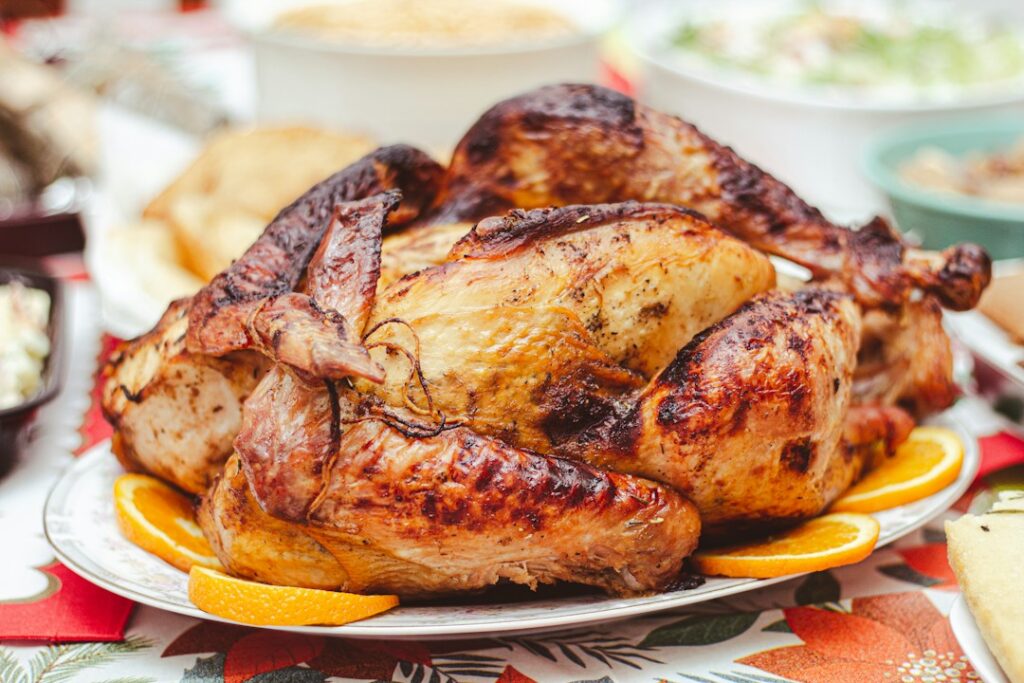
This lemon butter chicken and potatoes dinner brings golden, juicy chicken thighs, tender baby potatoes, fresh lemon, garlic, and herbs together in one roasting pan. The potatoes start in the oven while you prepare the lemon-butter mixture, then the chicken joins them so everything finishes with flavorful pan juices and less cleanup.
It is a practical family dinner for a busy weeknight, yet the bright citrus and buttery garlic aroma make it feel special enough for a relaxed weekend meal. Use bone-in, skin-on thighs for the most dependable timing and crisp skin. This lemon butter chicken and potatoes recipe is designed around that cut, with the potatoes getting a short head start.
Ingredients
- 4 bone-in, skin-on chicken thighs (about 2 pounds)
- 1 1/2 pounds baby potatoes, halved or quartered if large
- 3 tablespoons unsalted butter, melted
- 2 tablespoons olive oil
- 1 large lemon, zest and juice, plus extra slices for the pan
- 4 garlic cloves, finely minced
- 1 teaspoon dried oregano
- 1 teaspoon paprika
- 1/2 teaspoon dried thyme
- 1 teaspoon kosher salt, divided
- 1/2 teaspoon freshly ground black pepper
- 1/2 cup low-sodium chicken broth
- 2 tablespoons chopped fresh parsley, for serving
How to make one-pan lemon butter chicken and potatoes
- Heat the oven and prepare the potatoes. Preheat the oven to 425 degrees F. Pat the potatoes dry, then toss them with 1 tablespoon olive oil, about half the salt, pepper, and half the oregano. Spread them cut-side down in a roomy roasting pan or large rimmed sheet pan. Roast for 15 minutes to give them a head start.
- Mix the lemon butter. In a small bowl, stir together the melted butter, remaining olive oil, lemon zest and juice, minced garlic, paprika, thyme, remaining oregano, and a pinch of salt. Reserve a little of the mixture if you want to brush the chicken again near the end.
- Season the chicken. Pat the chicken thighs dry, especially the skin. Season with the remaining salt and pepper. Dry skin helps the fat render and encourages browning rather than steaming.
- Arrange everything in the pan. Remove the potatoes carefully and turn them if needed. Nestle the chicken thighs among the potatoes, skin-side up. Brush or spoon the lemon-butter mixture over the chicken and potatoes. Add lemon slices around the pan, not directly over the chicken skin.
- Add broth and roast. Pour the chicken broth into the pan around the potatoes. Avoid pouring it over the chicken skin. Return the pan to the oven and roast for about 35 to 40 minutes, depending on the size of the thighs and potatoes.
- Check doneness. Check the thickest part of each thigh with an instant-read thermometer without touching bone. Chicken should reach at least 165 degrees F for safety; thighs often have a better texture when cooked a little longer. Potatoes should be fork-tender and the chicken skin browned.
- Brown the skin if needed. If the chicken is cooked but the skin needs more color, broil for 1 to 3 minutes while watching closely. Move the pan only if it is safe for broiler use.
- Rest and serve. Let the chicken rest for about 5 minutes. Spoon the buttery lemon pan juices over the potatoes, scatter parsley on top, and serve directly from the pan.
Why this one-pan dinner works
Giving the potatoes a short head start helps them soften before the chicken’s juices begin to collect in the pan. The lemon zest supplies fragrant citrus oils, while the juice brightens the butter and broth. That balance is what makes lemon butter chicken and potatoes feel fresh instead of heavy. Garlic and herbs add savory flavor without needing a separate sauce. Keeping the chicken skin above the liquid lets it brown, and pouring broth around the vegetables helps prevent dry edges.
Ingredient tips and substitutions
- Chicken thighs: bone-in, skin-on thighs are the best fit for this timing. Boneless thighs or breasts cook faster, so begin checking them earlier and remove them as soon as they reach a safe temperature. The potatoes may need extra time after the chicken is removed.
- Potatoes: baby Yukon Gold or red potatoes hold their shape and have a creamy interior. If using larger potatoes, cut them into evenly sized pieces, roughly 1 inch.
- Butter and olive oil: butter gives the sauce a rich flavor; olive oil helps coat the potatoes and supports browning. You can use a little more olive oil if you need to reduce the butter.
- Fresh lemon: zest the lemon before juicing it. Bottled juice can work in a pinch, but fresh zest adds a much brighter aroma.
- Herbs: dried oregano and thyme are convenient. Fresh rosemary or thyme can be added in small sprigs; add delicate fresh parsley after roasting.
- Broth: low-sodium broth keeps the pan juices savory without making the dish overly salty. Water works if broth is unavailable, although the flavor will be lighter.
How to get tender potatoes and browned chicken
- For lemon butter chicken and potatoes with browned edges, use a large pan so the potatoes are not crowded into a deep pile. Crowding traps steam and slows browning.
- Dry the chicken skin and potatoes before seasoning. Excess moisture works against crisping.
- Keep the skin side facing up throughout roasting and avoid covering the pan.
- Cut potatoes to a consistent size. Smaller pieces cook sooner; large chunks may need more time.
- Let the chicken rest briefly before serving so the juices settle.
- Use a thermometer rather than relying only on color or a fixed cooking time. See the FoodSafety.gov safe minimum temperature chart for poultry guidance.
What to serve with lemon butter chicken and potatoes
The potatoes make this meal hearty, so a simple vegetable or salad is usually enough. The lemon butter chicken and potatoes pan juices also make a good base for serving with bread. Serve it with roasted green beans, steamed broccoli, sauteed spinach, asparagus, or a crisp green salad. Warm crusty bread can soak up the lemon-garlic juices. If you want a lighter plate, add a fresh cucumber and tomato salad with a little lemon instead of another buttery side.
Easy variations
- Add carrots: cut carrots into similar-sized pieces and roast them with the potatoes.
- Add green beans: tuck trimmed green beans into the pan during the last 15 minutes so they stay bright and tender.
- Use rosemary: replace or complement the thyme with a small amount of chopped rosemary for a woodsy flavor.
- Make it spicy: add a pinch of red pepper flakes to the lemon butter.
- Use boneless chicken: boneless thighs or breasts are convenient, but their cooking time is shorter. Remove the chicken when it reaches the safe temperature, then continue roasting the potatoes if needed.
Make-ahead and storage
To prep lemon butter chicken and potatoes ahead, cut the potatoes and mix the lemon-butter ingredients a few hours ahead. Keep the potatoes covered in the refrigerator and the butter mixture separate; soften or gently warm the butter mixture before using it. For best skin texture, season and roast the chicken just before serving.
Refrigerate leftovers promptly in a covered container and use within 3 to 4 days. Reheat chicken and potatoes in a 350-degree-F oven until hot, loosely covered at first if the potatoes are drying out, then uncover to warm the skin. A splash of broth can loosen the pan juices. Freeze portions in airtight containers for up to about 2 months for best quality; potatoes may soften after thawing.
Frequently asked questions
Can I use chicken breasts instead of thighs?
Yes, but breasts are leaner and usually cook faster. If adapting lemon butter chicken and potatoes for breasts, check them early. Add them after the potatoes have started roasting and check the internal temperature early. If the chicken finishes before the potatoes, remove it to rest while the potatoes continue in the oven.
Do I need to peel the baby potatoes?
No. Thin-skinned baby potatoes can be scrubbed and left unpeeled. Remove any damaged spots and cut them evenly so they cook at a similar rate.
How do I keep the chicken skin crispy?
Pat the skin dry, keep it facing upward, and avoid pouring broth or lemon butter over it after it is arranged. If needed, use a brief broil at the end while watching closely.
Can I prepare this on a sheet pan?
Yes. Use a large rimmed sheet pan with enough room for the chicken and potatoes in a single layer. If your pan is small, use two pans rather than overcrowding.
How do I know the chicken is done?
Use an instant-read thermometer in the thickest part of the meat without touching the bone. Poultry must reach at least 165 degrees F for safety. Thighs may be more tender when cooked beyond that minimum.
More chicken dinner ideas after lemon butter chicken and potatoes
- Cranberry Orange Glazed Chicken for a sweet-tart dinner with a festive glaze.
- Creamy Garlic Parmesan Chicken for a skillet meal with a silky sauce.
- Cranberry Spinach Stuffed Chicken Breast for a stuffed chicken option.