
Croissant bread is the magnificent intersection where everyday sandwich slices meet elite French patisserie. After extensive experience of testing recipes in my kitchen, I can tell you that achieving those shattering, golden layers in a standard loaf pan is entirely possible for the home baker. It requires patience and precision, but slicing into a loaf made of delicate, buttery pastry is a culinary triumph unlike any other.
The first time I made croissant loaf bread, I drastically underestimated the importance of temperature control, resulting in butter leaking everywhere in the oven. After countless rounds of testing throughout my career, I discovered the exact folding techniques and resting times required to lock the butter inside the dough. Whether you are using a traditional yeasted dough or incorporating a starter for a hybrid inspired by sourdough croissants, the secret always lies in the lamination process.
What separates this recipe from the rest is our highly controlled butter block (beurrage) technique and the adaptation for home equipment. People often debate: is a croissant bread or a pastry? The truth is, it’s a beautifully engineered hybrid. While some home bakers try shortcuts using a bread machine croissant dough setting to do the initial mixing, we focus on the artisanal hand-folding method that guarantees those iconic, honeycombed layers.
This croissant bread will not disappoint. Let’s get started.
Table of Contents
The Science of Laminated Dough (Croissant Bread)
Lamination is the culinary process of folding butter into dough multiple times to create alternating layers. When the loaf hits the hot oven, the water in the butter evaporates, creating steam. This steam pushes the dough layers apart, resulting in the flaky, airy texture that defines elite pastries.
I often hear the question, is croissant bread healthy? Let me be entirely candid: this is a rich, luxurious treat. It relies on a high percentage of premium European butter to achieve its texture. It is not diet food; it is a masterpiece of baking science meant to be enjoyed slowly and deliberately.
Ingredients You Will Need about Croissant Bread
To create the perfect loaf, you must start with the right foundation. Do not compromise on ingredient quality.
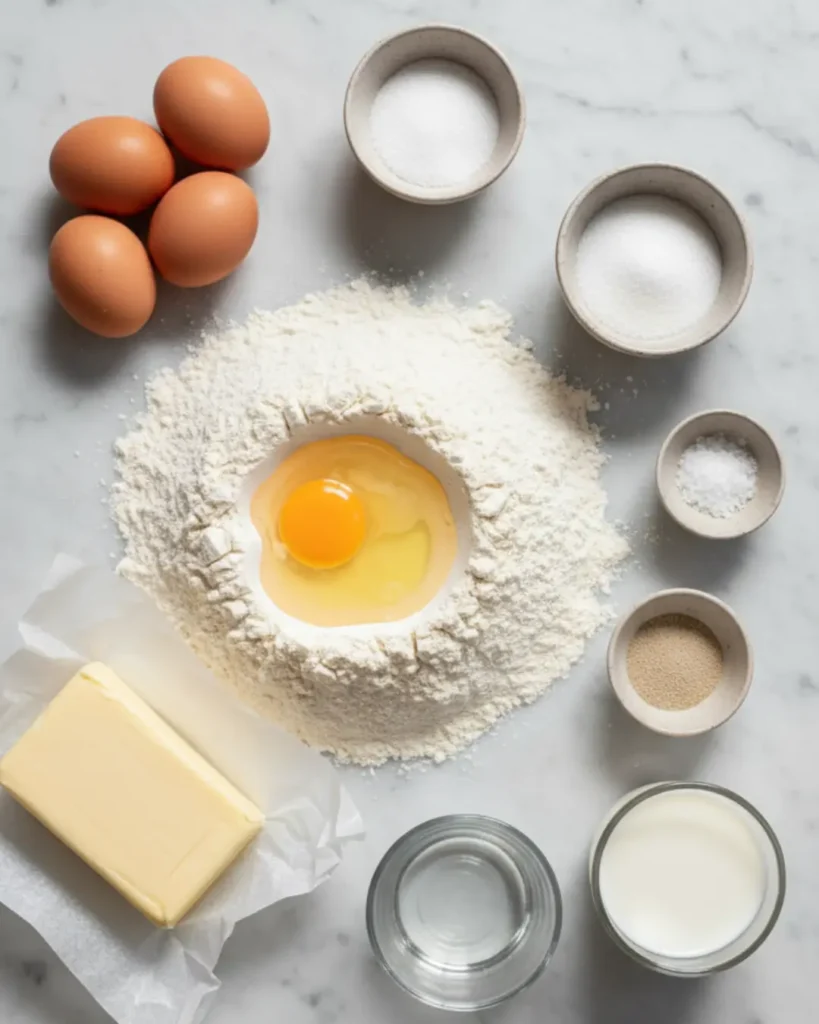
The Détrempe (Dough)
- Bread Flour (500g): You need high protein content (around 12-14%) to develop enough gluten to stretch around the butter layers without tearing.
- Whole Milk (250g): Chilled. The fat in the milk tenderizes the crumb.
- Active Dry Yeast (10g): Provides the lift.
- Granulated Sugar (50g): Feeds the yeast and aids in browning.
- Unsalted Butter (50g): Softened, mixed directly into the dough.
- Fine Sea Salt (10g): Essential for flavor and gluten regulation.
The Beurrage (Butter Block)
- High-Quality European Butter (250g): Must be 82% butterfat or higher. Standard American butter contains too much water, which will cause your layers to steam prematurely and merge.
Step-by-Step Instructions
1. Prepare the Dough (Détrempe)
Mix the flour, milk, yeast, sugar, salt, and softened butter in a stand mixer fitted with a dough hook. Mix on low for 5 minutes until a smooth, extensible dough forms. Form it into a rough rectangle, wrap it tightly in plastic wrap, and chill it in the refrigerator for at least 4 hours, preferably overnight.
2. Create the Butter Block
Take your cold European butter and place it between two sheets of parchment paper. Using a rolling pin, pound and roll the butter into an even 7×7 inch square. The butter must be pliable but cold bendable, but not melting. Place it back in the fridge to firm up for 15 minutes.
3. The Enclosing Step (Locking in the Butter)
Roll your chilled dough into a 7×14 inch rectangle. Place the butter square on one half of the dough. Fold the other half over the butter, completely encasing it. Pinch the edges aggressively to seal.
4. Lamination: The Folds
- First Fold (Letter Fold): Roll the encased dough out to a length of about 18 inches. Fold it in thirds, exactly like a business letter. Wrap in plastic and chill for 45 minutes.
- Second Fold (Book Fold): Roll the dough out again. Fold the two short ends in to meet at the center, then fold the whole thing in half (creating 4 layers). Chill for 45 minutes.
- Third Fold (Letter Fold): Repeat the first fold one last time. Chill for a final hour.
5. Shaping and Proofing
Roll the fully laminated dough into a rectangle slightly wider than your loaf pan. Cut the dough into three equal strips. Gently braid the strips (or simply roll them into tight cylinders) and place them into a buttered 9×5 inch loaf pan.
Expert Tip: Proofing is where many bakers fail. The dough must proof at a temperature below the melting point of butter (around 75°F / 24°C). If your room is too warm, the butter will melt out before it bakes. Proof for 2 to 3 hours, until the dough has doubled in size and feels incredibly jiggly.
6. Baking
Preheat your oven to 400°F (200°C). Brush the top of the loaf delicately with an egg wash (one egg beaten with a splash of milk). Bake for 15 minutes, then reduce the heat to 350°F (175°C) and bake for another 25-30 minutes until deep golden brown.
Expert Failure Warnings
Throughout my professional career, I’ve seen every laminated dough disaster possible. Here is how to avoid them:
- The Butter Shatters: If your butter is too cold when you try to roll it out, it will break into pieces inside the dough rather than forming a continuous sheet. Your baked loaf will be bread-like, not flaky. Ensure the butter is pliable.
- The Butter Melts: If your kitchen is too warm or you take too long to roll the dough, the butter will melt into the flour. If the dough feels sticky or soft, immediately return it to the fridge for 20 minutes.
- Under-Baking: Because of the dense layers, it is very easy to pull the loaf out too soon, resulting in a gummy center. The internal temperature of the baked loaf should reach at least 200°F (93°C).
Storage and Reheating
To maintain the optimal texture, store the loaf wrapped loosely in a paper bag at room temperature for up to 2 days. Do not store it in the refrigerator, as the cold will accelerate staling.
To reheat, slice the bread and toast it in a skillet or toaster oven for 2 minutes. The heat will re-crisp the buttery layers perfectly. For long-term storage, slice the cooled loaf, wrap individual slices in plastic wrap, and freeze for up to 2 months.
Frequently Asked Questions
Can I use a bread machine to make this?
You can use a bread machine to mix and do the first rise for the base dough (the détrempe), but the butter block lamination and folding must be done by hand on a cold counter.
Why did my bread leak a pool of butter while baking?
This happens for two reasons: either the dough was under-proofed (meaning the yeast didn’t create enough structure to hold the butter), or your proofing environment was too warm, melting the butter before it ever reached the oven.
Can I make this with sourdough?
Yes. You can substitute 100g of active sourdough starter for the commercial yeast, adjusting your flour and liquid ratios accordingly. The natural acidity actually makes the dough easier to roll out, yielding an incredible complex flavor.
How to make croissant bread pudding?
- Tear stale croissants into chunks and lightly toast them in the oven so they absorb the liquid without becoming mushy.
- Whisk together a rich custard of milk, heavy cream, eggs, sugar, and vanilla, then pour it completely over the pastries.
- Let the mixture soak for 45 minutes, then bake at 350°F (175°C) for 45-50 minutes until golden and just set.
How To Bake Perfect Croissants At Home?
- Carefully roll out your cold, laminated dough and use a sharp knife to cut it into long, even triangles.
- Gently roll the triangles from the base to the tip, tucking the point underneath, and let them proof slowly until doubled in size.
- Brush delicately with an egg wash and bake at 400°F (200°C) to achieve shattering, flaky layers and a deep golden-brown finish.
How to make croissant bread step by step?
- Prepare a base dough with bread flour, yeast, and milk, knead it until smooth, and chill it in the refrigerator overnight.
- Encase a block of cold European butter inside the dough, then perform three series of rolling and folding, chilling the dough between each turn.
- Cut the laminated dough into thick strips, place them in a loaf pan, proof in a cool environment, and bake until beautifully puffed and browned.
Conclusion
Baking croissant bread is a labor of love that rewards you with one of the most texturally magnificent baked goods imaginable. By respecting the temperature of your ingredients and following the lamination steps precisely, you can bring elite bakery quality right into your home kitchen.