Thai noodle salad is an absolute masterpiece of flavor and texture, combining crisp, rainbow-colored vegetables with tender noodles, all draped in a luscious, umami-rich sauce. After extensive experience of testing recipes in my kitchen, I can tell you that the secret to a truly unforgettable dish lies in the balance of sweet, sour, salty, and spicy elements working in perfect harmony. This is not just a side dish; it is a vibrant, nutrient-dense main course that will completely transform your weekly meal rotation.
The first time I made a vegan Thai salad, I completely underestimated the importance of treating the noodles with care, resulting in a gummy, stuck-together mess that completely ruined the dish. After countless rounds of testing throughout my career as a culinary instructor, I discovered the exact starch-rinsing technique required to keep rice noodles perfectly separated and bouncy. I also learned that the dressing needs to be aggressively seasoned up front, as the noodles and raw vegetables will naturally dilute the flavor profile once they are combined and left to marinate.
What separates this cold noodle salad from the rest is the unapologetic richness of its signature peanut dressing, balanced by the sharp, acidic punch of fresh lime juice and the savory depth of soy sauce. Unlike store-bought versions that rely heavily on refined sugars, this dressing uses a touch of natural maple syrup and the inherent sweetness of the roasted peanuts. Furthermore, the inclusion of robust, hearty vegetables like purple cabbage and bell peppers ensures that the salad maintains an incredible crunch, even days after it has been prepped and stored.
This Thai noodle salad will not disappoint. Let’s get started on creating what is guaranteed to become your new favorite, intensely flavorful, and naturally gluten-free noodles recipe that your entire family will devour.
Table of Contents
The Anatomy of the Perfect Thai Noodle Salad
Creating a restaurant-quality noodle salad at home requires a strategic approach to ingredient selection. Every component must serve a distinct purpose whether it is adding crunch, absorbing sauce, or providing a burst of aromatic freshness.
Fresh Produce and Crunch Factor
The foundation of our salad is the vibrant, crunchy vegetable base. You want vegetables that can stand up to a heavy dressing without weeping or wilting immediately.
- Red Cabbage: Finely shredded. It provides a stunning purple hue and an earthy, robust crunch that holds up beautifully in the fridge.
- Carrots: Julienned or grated. They offer natural sweetness and structural integrity.
- Red Bell Pepper: Thinly sliced. It brings a bright, fruity sweetness and a satisfying snap.
- Edamame: Shelled and steamed. These brilliant green soybeans introduce a highly necessary element of plant-based protein and a creamy texture that contrasts with the raw vegetables.
- Green Onions (Scallions): Thinly sliced on the bias. They provide a mild, oniony bite without overpowering the dish.
The Aromatic Herbs
Do not skip the herbs; they are the soul of Southeast Asian-inspired cuisine.
- Fresh Cilantro: Roughly chopped. It adds a bright, citrusy, and slightly peppery lift.
- Fresh Mint: Torn or chiffonade. A cooling element that cuts through the richness of the peanut sauce perfectly.
The Noodle Base
The carbohydrate foundation dictates the mouthfeel of the entire recipe.
- Brown Rice Noodles: Look for pad thai-style flat noodles (medium width). They possess a wonderful chew and act as the perfect canvas for the dressing. If you prefer a lighter carb load, kelp noodles or zucchini noodles can be substituted, though they will not absorb the dressing in the same way.
The Ultimate Peanut Dressing
This sauce is liquid gold. It is rich, complex, and emulsifies into a creamy dream. You will likely want to double this recipe to use as a dip for spring rolls or a drizzle over roasted vegetables.
- Creamy Peanut Butter: Use natural peanut butter where the only ingredients are peanuts and salt. Conventional peanut butters with added oils and sugar will make the dressing artificially sweet and overly thick.
- Low-Sodium Soy Sauce (or Tamari): Provides the deep, savory umami base. Use tamari to keep the recipe strictly gluten-free.
- Rice Vinegar: Adds a mild, slightly sweet acidity that brightens the heavy nut butter.
- Fresh Lime Juice: Crucial for a sharp, zesty tang. Always use freshly squeezed lime juice; bottled lime juice contains preservatives that flatten the flavor.
- Maple Syrup: Balances the acid and salt with a clean, natural sweetness.
- Toasted Sesame Oil: Just a teaspoon adds an unmistakable, deeply roasted aroma.
- Fresh Ginger and Garlic: Minced or grated into a paste. These aromatics provide the spicy, pungent backbone of the dressing.
- Sriracha or Chili Garlic Sauce: For that essential kick of heat. Adjust to your personal spice tolerance.
- Warm Water: Used strictly to thin the dressing to your desired consistency.
Step-by-Step Instructions for Success Thai Noodle Salad
Follow these steps precisely to ensure your salad has the optimal texture and flavor distribution.
Step 1: Prepare the Noodle Base
Cooking rice noodles is different from cooking Italian pasta. If you boil them too long, they turn to mush; if you do not rinse them, they turn into a solid block.
- Bring a large pot of water to a rolling boil. Remove the pot from the heat completely.
- Submerge the rice noodles in the hot water. Let them soak for exactly 8-10 minutes, stirring occasionally to prevent sticking. Test a noodle at the 8-minute mark; it should be al dente and chewy.
- Drain the noodles immediately and rinse them under freezing cold running water. Expert Failure Warning: If you skip the cold water rinse, the residual starches will cause the noodles to stick together aggressively as they cool, making them impossible to toss with the vegetables. Once rinsed and cooled, toss the noodles with a few drops of sesame oil to keep them slippery.
Step 2: Emulsify the Dressing
While the noodles are soaking, prepare your liquid gold.
- In a medium-sized mixing bowl or a large glass jar with a tight-fitting lid, combine the peanut butter, soy sauce, rice vinegar, lime juice, maple syrup, sesame oil, grated ginger, minced garlic, and sriracha.
- Whisk vigorously (or shake the jar violently) until the ingredients are completely combined.
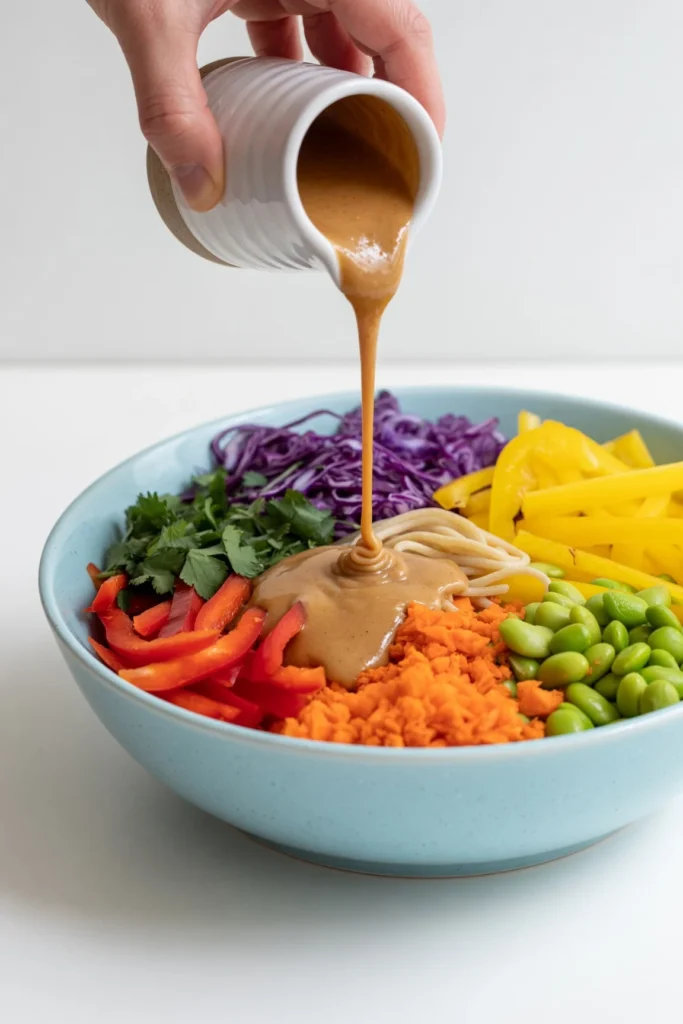
- The mixture will likely be quite thick. Slowly whisk in warm water, one tablespoon at a time, until the dressing reaches a pourable, velvety consistency—similar to heavy cream.
Step 3: Chop and Assemble
- Prepare all your vegetables—cabbage, carrots, bell peppers, edamame, and green onions—and place them in an exceptionally large mixing bowl. The bowl should be twice as big as you think you need to allow for aggressive tossing.
- Add the cooled, oiled rice noodles to the bowl of vegetables.
- Pour about three-quarters of the peanut dressing over the top of the salad.
- Using kitchen tongs, toss the salad vigorously. Ensure every single noodle and vegetable shred is coated in the dressing.
- Add the fresh chopped cilantro and mint, then toss gently one final time.
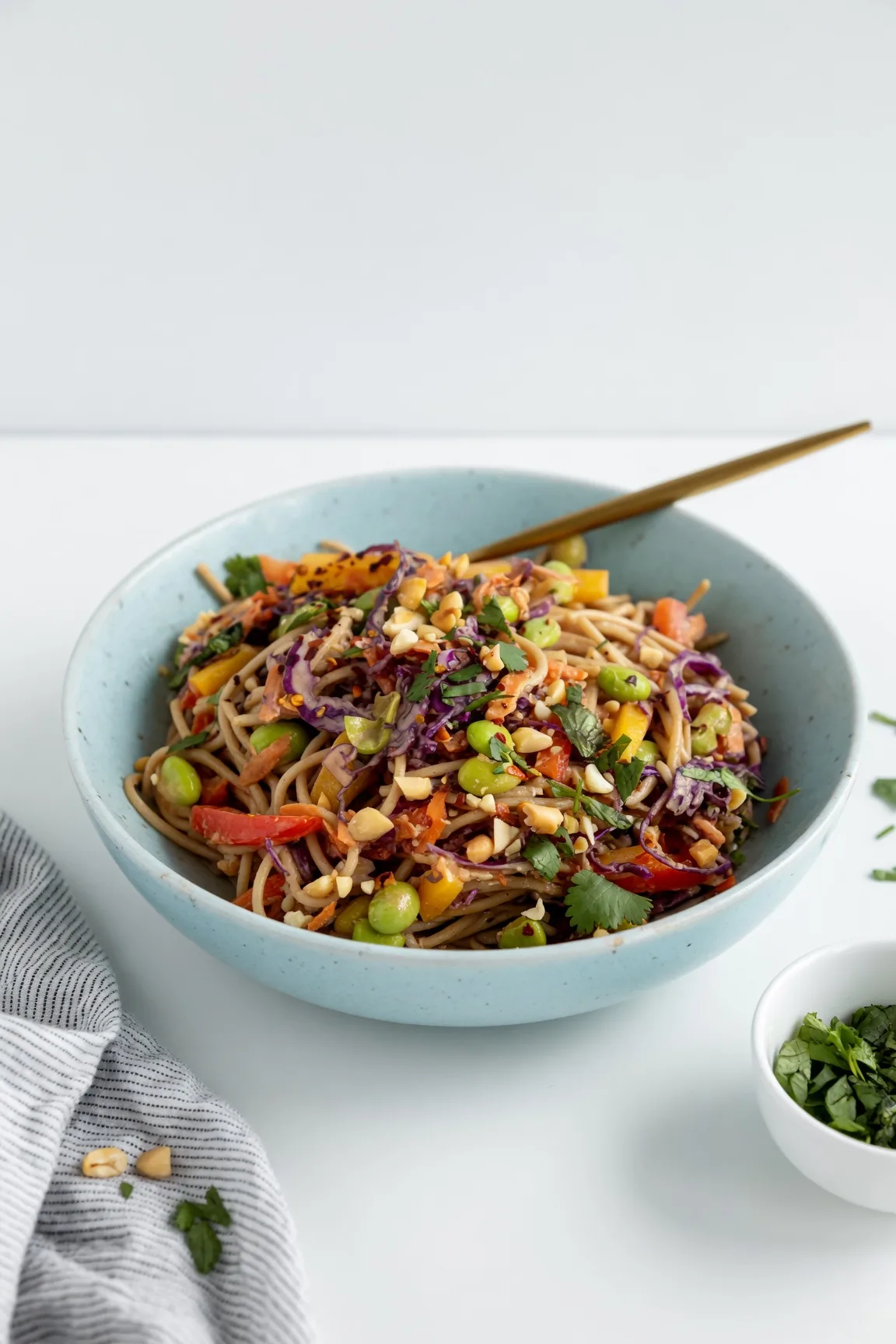
- Garnish with crushed roasted peanuts and extra lime wedges. Serve the remaining dressing on the side for those who prefer an extra saucy experience.
Pro Tips from the Test Kitchen
Throughout my decades of professional practice developing recipes, I’ve learned a few non-negotiable tricks for this specific dish:
- Massage the Cabbage: If your red cabbage is particularly tough, place it in a separate bowl with a tiny pinch of salt and massage it with your hands for 60 seconds before adding it to the salad. This slightly breaks down the tough cellular walls, making it much more palatable while retaining its crunch.
- The Mason Jar Shake: For the absolute best emulsion of your peanut dressing, skip the whisk and use a mason jar. The sheer force of shaking forces the oils and liquids to bind together perfectly, preventing separation.
- Temperature Matters: This salad is best served cold or at room temperature. If serving straight from the fridge, let it sit on the counter for 15 minutes to allow the peanut oils in the dressing to soften and loosen up.
Exciting Flavor Variations
While this recipe is spectacular as written, it is also a fantastic canvas for your culinary creativity.
Protein Power-Ups
To transform this from a light meal into a heavy-duty dinner:
- Crispy Tofu: Toss cubed firm tofu in cornstarch and soy sauce, then bake or air-fry until deeply golden and crunchy. Fold into the salad just before serving.
- Grilled Lemongrass Chicken: For non-vegans, thinly sliced grilled chicken breast marinated in lemongrass, garlic, and fish sauce is an incredible addition.
- Garlic Butter Shrimp: Sautéed shrimp tossed on top right before serving adds an elegant touch and fantastic texture contrast.
Allergy-Friendly Swaps
- Nut-Free: Swap the peanut butter for sunflower seed butter (SunButter) or tahini. Both provide excellent creaminess. Replace the crushed peanut garnish with toasted sesame seeds or roasted sunflower seeds.
- Soy-Free: Substitute the soy sauce for coconut aminos. Keep in mind that coconut aminos are slightly sweeter and less salty, so you may need to add an extra pinch of sea salt to the dressing to balance the flavor profile.
Storage and Meal Prep Protocol
This recipe is a champion for meal preparation, provided you follow proper storage procedures.
Fridge Storage: Store the assembled salad in an airtight container in the refrigerator for up to 4 days. Because cabbage and carrots are robust vegetables, they will actually marinate and taste even better on day two.
Meal Prep Strategy: If you are making this for lunches throughout the week, I highly recommend storing the dressing in separate, small containers. Keep the noodles and vegetables mixed together, but wait to dress the salad until exactly when you are ready to eat. This ensures the maximum possible crunch factor for the vegetables and prevents the noodles from soaking up all the moisture and drying out the salad.
Freezing: Do not freeze this salad. The raw vegetables will turn to absolute mush upon thawing, and the rice noodles will disintegrate. This is a fresh-only recipe.
Frequently Asked Questions (FAQ)
Why are my rice noodles sticky and clumpy?
This happens when the noodles are overcooked or, more commonly, not rinsed properly. You must shock the noodles in ice-cold water immediately after cooking to halt the cooking process and wash away the excess surface starch. If they still clump, toss them with a tiny amount of sesame oil.
Can I make the dressing ahead of time?
Absolutely. The peanut dressing can be made up to a week in advance and stored in an airtight jar in the refrigerator. The flavors will actually deepen and meld over time. If it solidifies in the fridge, simply let it sit at room temperature for 10 minutes or microwave it for 5-10 seconds before shaking vigorously.
What kind of peanut butter is best?
Natural, creamy peanut butter is mandatory. Check the ingredient label: it should only say “peanuts” and perhaps “salt.” If you use standard commercial brands like Jif or Skippy, your dressing will be far too sweet and thick due to the added palm oil and icing sugar.
Is this salad spicy?
As written, it has a mild-to-medium kick from the sriracha. You are in complete control of the heat level. Omit the sriracha entirely for a mild version, or add fresh minced Thai bird’s eye chilies to the dressing if you want an intense, fiery burn.
Conclusion
Mastering this Thai noodle salad is a guaranteed way to elevate your culinary repertoire. By respecting the cooking techniques for the rice noodles, balancing the bold flavors of the peanut dressing, and utilizing the freshest, crunchiest vegetables available, you will create a dish that is visually stunning, nutritionally dense, and explosively flavorful. Enjoy the process, don’t be afraid to adjust the acid and salt to your personal palate, and get ready for this recipe to be requested at every gathering.
Thai Noodle Salad: The Ultimate Crisp & Spicy Recipe
Ingredients
Method
- Bring a large pot of water to a boil. Remove from heat, submerge the rice noodles, and let soak for 8-10 minutes until chewy and al dente.
- Drain the noodles immediately and rinse thoroughly under very cold running water to remove excess starch. Toss with a few drops of sesame oil to prevent sticking and set aside.
- In a medium bowl or a glass jar with a tight-fitting lid, combine the peanut butter, tamari, rice vinegar, lime juice, maple syrup, sesame oil, ginger, garlic, and sriracha. Whisk or shake vigorously to combine.
- Gradually whisk in the warm water, 1 tablespoon at a time, until the dressing reaches a smooth, pourable consistency.
- In an exceptionally large mixing bowl, combine the shredded red cabbage, carrots, red bell pepper, edamame, and green onions.
- Add the cooled rice noodles to the bowl of vegetables. Pour 3/4 of the peanut dressing over the top.
- Using kitchen tongs, toss the salad vigorously until all noodles and vegetables are evenly coated with the dressing.
- Gently fold in the fresh cilantro and mint. Garnish with crushed roasted peanuts and serve immediately, or store for meal prep.