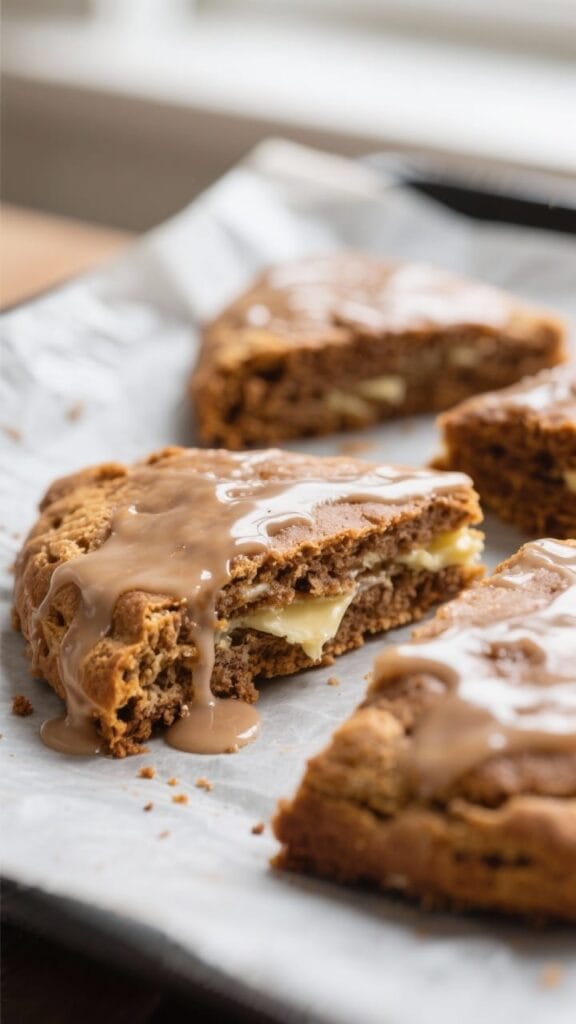
If you love the warm, nostalgic flavors of gingerbread, these easy gingerbread scones will become a fast favorite. They’re tender inside, lightly crisp at the edges, and full of cozy spices. No special equipment, no tricky steps just simple ingredients and straightforward instructions.
Enjoy them warm with a drizzle of vanilla glaze or a pat of butter. They’re ideal for holiday mornings, weekend baking, or a quick homemade treat with coffee or tea.
Table of Contents
What Makes This Gingerbread Scones Recipe Easy So Good
- Quick and simple: You can have fresh scones in under an hour, start to finish.
- Balanced spice: Ginger, cinnamon, nutmeg, and cloves bring that classic gingerbread flavor without overpowering the dough.
- Moist and tender: The combination of cold butter and buttermilk keeps the crumb soft and flaky.
- Not too sweet: A little brown sugar and molasses add warmth and depth, leaving room for a glaze if you want it.
- Foolproof method: The dough comes together easily and holds its shape, so the scones bake up tall and beautiful.
What You’ll Need
- All-purpose flour: The base of the scones. Use a spoon-and-level method for accuracy.
- Brown sugar: Light or dark both work; dark brown sugar gives a deeper molasses flavor.
- Baking powder: For lift and a tender crumb.
- Baking soda: Reacts with the acid in buttermilk and molasses to help rise.
- Salt: Just enough to balance the sweetness and spice.
- Ground ginger: The star spice—don’t skimp.
- Cinnamon, nutmeg, and cloves: Classic gingerbread notes for warmth and aroma.
- Cold unsalted butter: Cut into small cubes; cold butter is key to flaky layers.
- Molasses: Unsulphured molasses adds that signature gingerbread taste.
- Buttermilk: Keeps the dough tender and helps it rise.
Milk with a squeeze of lemon works in a pinch.
- Vanilla extract: Rounds out the flavors.
- Optional add-ins: Mini chocolate chips, chopped candied ginger, or orange zest.
- For the glaze (optional): Powdered sugar, milk or cream, and vanilla (or orange juice for a citrusy twist).
How to Make It
- Preheat and prep: Heat your oven to 400°F (200°C). Line a baking sheet with parchment paper.
- Mix dry ingredients: In a large bowl, whisk 2 1/4 cups all-purpose flour, 1/3 cup brown sugar, 1 tablespoon baking powder, 1/2 teaspoon baking soda, 1/2 teaspoon salt, 2 teaspoons ground ginger, 1 teaspoon cinnamon, 1/4 teaspoon nutmeg, and 1/8 teaspoon cloves.
- Cut in butter: Add 1/2 cup cold unsalted butter (cubed). Use a pastry cutter or your fingertips to work it into the flour until it looks like coarse crumbs with pea-sized bits.
- Combine wet ingredients: In a measuring cup, whisk 1/2 cup buttermilk, 1/4 cup molasses, and 1 teaspoon vanilla.
If your molasses is thick, warm it slightly so it blends smoothly.
- Bring the dough together: Pour the wet mixture into the dry ingredients. Stir gently with a fork until the dough is shaggy and mostly combined. If it’s too dry, add 1–2 tablespoons more buttermilk.
If using add-ins, fold them in now.
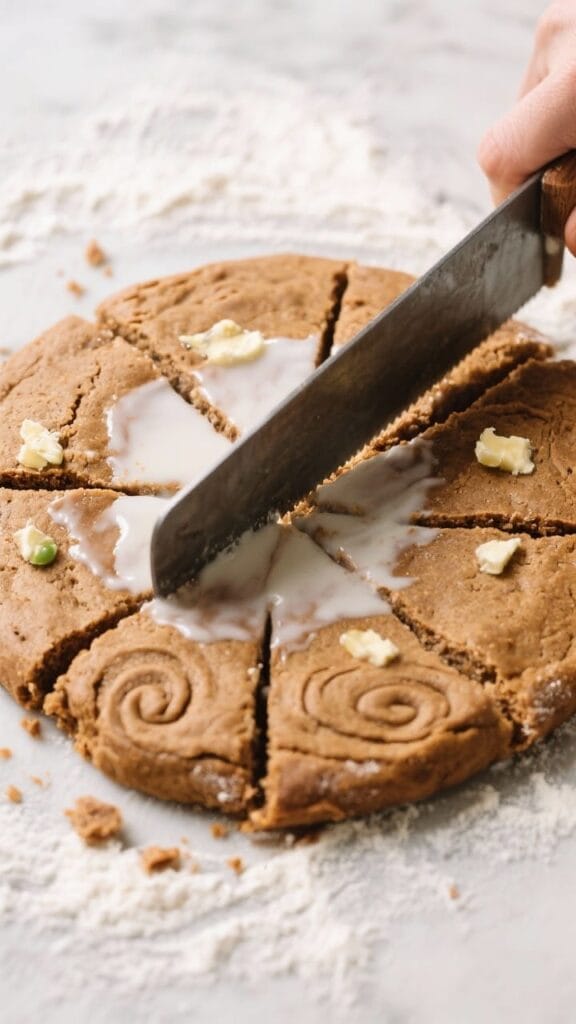
- Shape: Turn the dough onto a lightly floured surface. Gently knead 4–6 times to bring it together don’t overwork. Pat into a 7–8 inch round, about 1 inch thick.
- Cut: Use a sharp knife or bench scraper to cut the round into 8 wedges.
Transfer to the lined baking sheet, spacing them apart. For taller scones, chill the tray for 10 minutes before baking.
- Bake: Brush the tops with a little buttermilk or cream for color (optional). Bake 13–16 minutes, until the edges are set and the tops feel firm.
They should be lightly golden at the bottom.
- Cool and glaze: Let scones cool for 10 minutes. Whisk 3/4 cup powdered sugar with 1–2 tablespoons milk or cream and 1/2 teaspoon vanilla until smooth. Drizzle over warm scones.
- Serve: Enjoy warm with butter, honey, or a dollop of whipped cream.
They’re especially good with coffee or spiced tea.
Storage Instructions
- Room temperature: Store cooled scones in an airtight container for up to 2 days.
- Refrigerator: Keeps for 4–5 days. Warm in a low oven for best texture.
- Freezer: Freeze baked scones (unglazed) up to 2 months. Thaw at room temp, then warm and glaze.
- Freeze before baking: Freeze cut, unbaked wedges on a tray, then transfer to a bag.
Bake from frozen at 400°F, adding 2–3 extra minutes.

Health Benefits
- Ginger: Known for digestive support and anti-inflammatory properties.
- Molasses: Provides small amounts of iron, calcium, and potassium compared to white sugar.
- Reasonable sweetness: These scones rely on spice and molasses for flavor, so they’re not overly sugary.
- Customizable: You can swap in partial whole wheat flour, add nuts for healthy fats, or reduce glaze to cut sugar.
Common Mistakes to Avoid
- Warm butter: If the butter gets soft, the scones won’t rise as well. Keep everything cold.
- Overmixing: Too much handling makes scones tough. Stop as soon as the dough comes together.
- Using too much flour: Scoop-and-pack leads to dry scones.
Spoon flour into the cup and level it.
- Skipping the chill: A brief chill before baking helps set the butter and creates better lift.
- Overbaking: Pull them when they’re just set. Overbaked scones can turn dry quickly.
Variations You Can Try
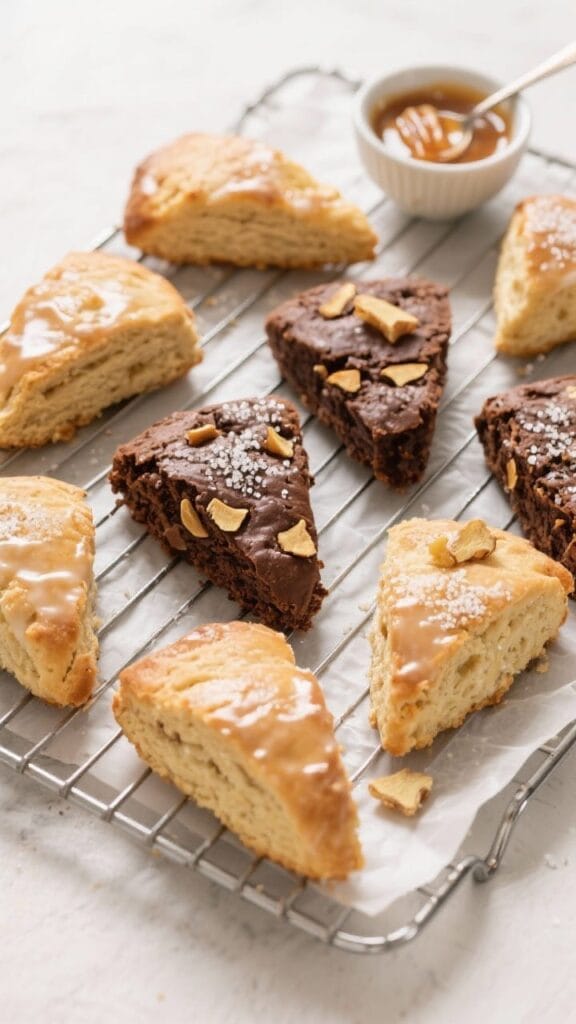
- Orange glaze: Swap milk with orange juice and add zest to the dough for a bright, citrusy finish.
- Chocolate ginger: Fold in 1/2 cup mini chocolate chips for a bakery-style treat.
- Candied ginger: Add 1/3 cup chopped candied ginger for extra zing and texture.
- Whole wheat twist: Replace 3/4 cup all-purpose flour with whole wheat pastry flour for a heartier flavor.
- Maple glaze: Use maple syrup instead of milk in the glaze and add a pinch of cinnamon.
- Cranberry crunch: Mix in 1/2 cup dried cranberries and sprinkle coarse sugar on top before baking.
FAQ
Can I make these scones without buttermilk?
Yes. Mix 1/2 cup milk with 1 1/2 teaspoons lemon juice or vinegar, let it sit for 5 minutes, and use it in place of buttermilk.
The texture will still be tender.
What kind of molasses should I use?
Use unsulphured molasses. Avoid blackstrap for this recipe it’s more bitter and can overpower the flavors.
How do I get taller, flakier scones?
Keep your butter and dough cold, don’t overwork it, and chill the cut wedges for 10 minutes before baking. Also, ensure your baking powder is fresh.
Can I make the dough ahead of time?
Yes.
Shape and cut the scones, then refrigerate up to 12 hours or freeze. Bake straight from the fridge or freezer, adding a couple of minutes if frozen.
How do I prevent the dough from sticking?
Lightly flour your work surface and your hands. If the dough is very sticky, chill it for 10 minutes and dust with a bit more flour as needed.
Are these scones very sweet?
They’re moderately sweet, leaning on molasses and spice for flavor.
If you like sweeter scones, add the glaze or sprinkle coarse sugar before baking.
Can I make them dairy-free?
Use a plant-based butter that stays firm when cold, and swap buttermilk with unsweetened non-dairy milk mixed with 1 1/2 teaspoons lemon juice or vinegar.
Wrapping Up
These Gingerbread Scones Recipe Easy scones bring all the cozy spice of the season with minimal fuss. The method is simple, the ingredient list is friendly, and the results are bakery-worthy. Keep a batch on hand for holiday mornings or quick weekday treats, and customize them with your favorite add-ins or glazes.
Warm, fragrant, and just sweet enough this is a recipe you’ll come back to all winter long.
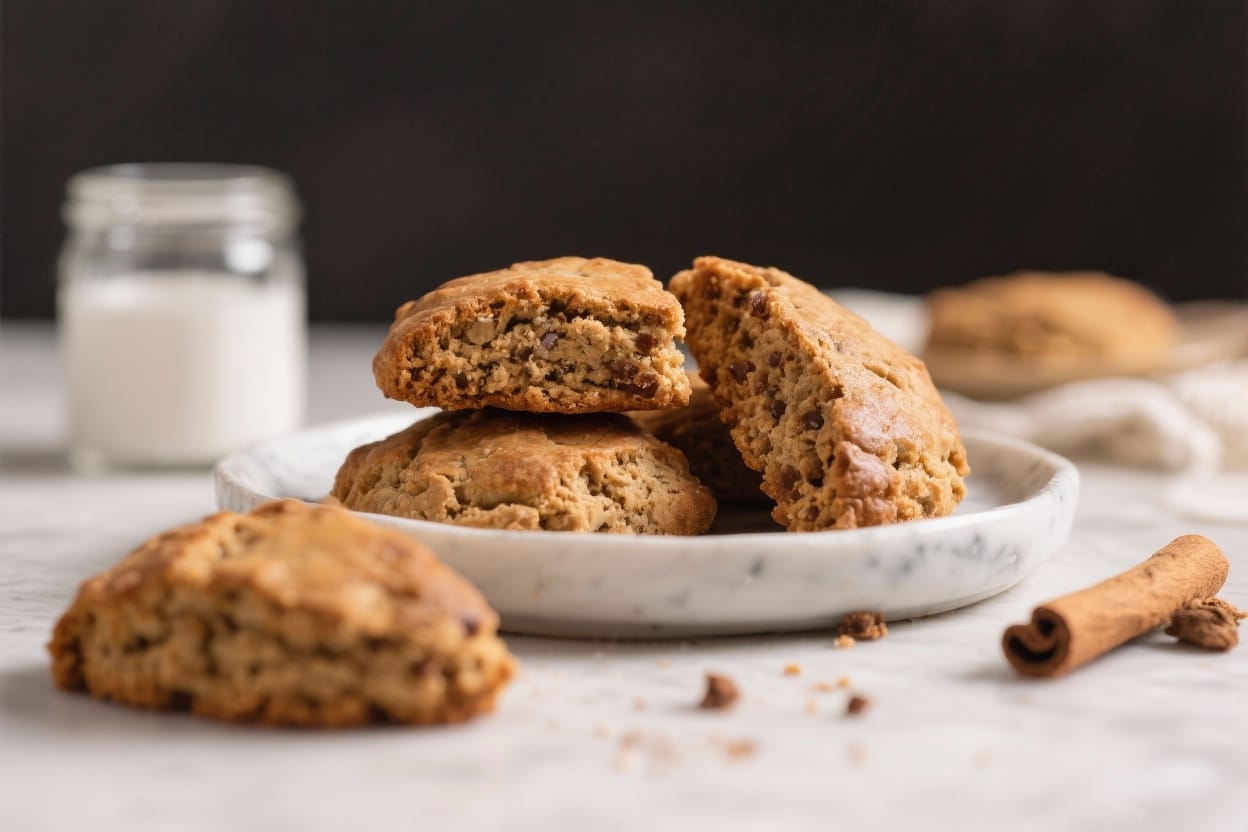
Gingerbread Scones Recipe Easy – Cozy, Spiced, and Perfect for Breakfast
Ingredients
Method
- Preheat and prep: Heat your oven to 400°F (200°C). Line a baking sheet with parchment paper.
- Mix dry ingredients: In a large bowl, whisk 2 1/4 cups all-purpose flour, 1/3 cup brown sugar, 1 tablespoon baking powder, 1/2 teaspoon baking soda, 1/2 teaspoon salt, 2 teaspoons ground ginger, 1 teaspoon cinnamon, 1/4 teaspoon nutmeg, and 1/8 teaspoon cloves.
- Cut in butter: Add 1/2 cup cold unsalted butter (cubed). Use a pastry cutter or your fingertips to work it into the flour until it looks like coarse crumbs with pea-sized bits.
- Combine wet ingredients: In a measuring cup, whisk 1/2 cup buttermilk, 1/4 cup molasses, and 1 teaspoon vanilla.If your molasses is thick, warm it slightly so it blends smoothly.
- Bring the dough together: Pour the wet mixture into the dry ingredients. Stir gently with a fork until the dough is shaggy and mostly combined. If it’s too dry, add 1–2 tablespoons more buttermilk.If using add-ins, fold them in now.
- Shape: Turn the dough onto a lightly floured surface. Gently knead 4–6 times to bring it together—don’t overwork. Pat into a 7–8 inch round, about 1 inch thick.
- Cut: Use a sharp knife or bench scraper to cut the round into 8 wedges.Transfer to the lined baking sheet, spacing them apart. For taller scones, chill the tray for 10 minutes before baking.
- Bake: Brush the tops with a little buttermilk or cream for color (optional). Bake 13–16 minutes, until the edges are set and the tops feel firm.They should be lightly golden at the bottom.
- Cool and glaze: Let scones cool for 10 minutes. Whisk 3/4 cup powdered sugar with 1–2 tablespoons milk or cream and 1/2 teaspoon vanilla until smooth. Drizzle over warm scones.
- Serve: Enjoy warm with butter, honey, or a dollop of whipped cream.They’re especially good with coffee or spiced tea.