So, you’re wondering how to make iced matcha that tastes professional? Here’s the straightforward answer: Whisk 2 teaspoons of matcha powder with 3 tablespoons of hot water (around 70-80°C / 160-180°F), add sugar or honey, pour cold milk over ice, whisk gently for 15 seconds, and serve. The result? A creamy, silky drink that rivals what you’d pay $8-10 for at a fancy café but you’re making it at home, cheaper, and with ingredients you control.
Table of Contents
Why I’m Telling You This (And Who I Am)
I’m Chef Luna, and honestly, I think it’s important you know who’s giving you advice before you follow it. I’ve spent about 20 years working with matcha in professional kitchens Tokyo, New York, and now my own culinary studio. I wasn’t just experimenting casually either. I trained with a certified matcha ceremony master in Kyoto, my recipes have appeared in publications like Saveur and Food & Wine, and I’ve taught over 500 people how to make matcha properly.
Why am I telling you all this? Maybe because you deserve to know that this recipe isn’t some random internet advice it’s tested, hands-on, and real.
What You’ll Find in This Guide
In the sections ahead, you’ll get the steps broken down, but here’s what matters most: I’m going to explain the why behind everything. Because most recipes online just say “do this” without explaining the reason. And I think that’s a mistake. When you understand why you whisk in a W-motion instead of circular strokes, or why water temperature matters so much, you’ll become genuinely better at making matcha probably nailing it on your first try.
Let’s Be Honest: What Makes This Recipe Different?
Look, I’ll be real with you. There are hundreds maybe thousands of iced matcha recipes online. Most of them are roughly correct, but they’re missing precision. For example:
The Problem: Some recipes just say “use hot water,” no temperature specified. Result? You might end up with bitter, chalky matcha that tastes nothing like what you paid for at a café.
Another Issue: Most guides don’t explain why you whisk a certain way. Here’s something you should know: the W-motion creates fine, delicate foam, while circular whisking creates big, ugly bubbles. That’s a massive difference, and almost nobody mentions it.
The Third Problem: Nobody talks about matcha quality. I can say with confidence that the difference between cheap matcha and good matcha is the difference between a bad drink and an amazing one.
Bottom line? This guide is different because it obsesses over every small detail that actually makes a difference.
Why You’ll Actually Love This Recipe (Honestly)
- It’s ridiculously fast : Under 2 minutes, no waiting around. Perfect for mornings when you need energy but don’t want the jitters that come with coffee
- Looks like it costs $10, tastes even better: Your guests will think you know someone at an upscale café. Spoiler: you don’t. You just read this guide
- The flavor is genuinely good : I’m not going to pretend this tastes like some health drink. It’s delicious. The earthiness is balanced, the sweetness is subtle, the texture is creamy. Even matcha skeptics enjoy it
- You can customize it exactly how you like it: Too sweet? Dial it back. Want more matcha flavor? Add a half-teaspoon more. Within a few tries, you’ll nail your perfect version every single time
- This is a genuine culinary moment: And yeah, I mean that. Making something beautiful with your hands, understanding the craft, creating something better than you can buy that’s worth something
- It saves money: One tin of quality matcha makes dozens of drinks. Do the math on how much you’re spending at cafés right now
- It’s actually healthy: Packed with antioxidants, natural energy, zero artificial ingredients. But I’m not going to act like you’re drinking this for health. You’re drinking it because it tastes good
The Ingredients You Need (And Why Each One Matters)
2 teaspoons of high-quality matcha powder And honestly, this is where the real difference starts. Get matcha that’s deep forest-green (not the bright, neon-green stuff you see in cheap stores). Look for ceremonial-grade or premium culinary-grade from reputable Japanese sources. Why does this matter? Cheap matcha tastes bitter and grassy. Good matcha is naturally sweet, with deep umami notes. This one choice makes the difference between “meh” and “wow”
3 tablespoons of hot water: Specifically, around 70-80°C (160-180°F). I know what you’re thinking: “Really? That specific?” Yes, really. Water that’s too hot (above 85°C) literally burns the matcha and destroys the delicate flavors. Water that’s too cool (below 70°C) doesn’t properly dissolve the powder and leaves you with lumps. Get a small digital thermometer—it costs about $10 and will improve every matcha drink you ever make
1 tablespoon of organic cane sugar or honey — At room temperature (so it dissolves easily). If you like sweeter drinks, go for 1.5 tablespoons. Prefer it less sweet? Use half a tablespoon. Your preference, your drink
½ cup of cold whole milk: Full-fat dairy creates that signature creamy texture. If you prefer plant-based? Oat milk comes closest to dairy (it’s thicker and creamier). Almond milk is lighter but adds a subtle nuttiness. Coconut milk (the drinking kind, not canned) adds tropical notes. All of these work beautifully
½ cup ice cubes:About 4-6 large cubes. The key is using ice made from filtered water if you can
A tiny pinch of sea salt: This is something most home cooks don’t know about. Professional baristas add a microscopic amount of salt to enhance the umami and balance the sweetness. It’s subtle, but genuinely transformative
Optional: matcha whip or whipped cream If you want that café aesthetic, whip heavy cream with a tiny pinch of matcha powder and a tiny bit of sugar, then dollop on top
How to Make Iced Matcha: Step by Step
Step 1: Sift Your Matcha Powder
Why this matters: Matcha powder clumps during storage. Sifting breaks up those clumps, giving you a silky drink instead of a grainy one. Skip this and you’ll taste the difference.
- Place a fine-mesh sifter over a small bowl
- Spoon matcha powder into the sifter and gently press with the back of a spoon
- Let it fall naturally into the bowl don’t force it
- You should have fine, fluffy powder ready to whisk
Step 2: Whisk the Matcha (This Is the Secret)
Why this matters: This is where the magic happens. Whisking hydrates the powder, breaks it down, and creates that signature creamy foam. If you skip this or do it wrong, you’ll have an uneven, cloudy drink.
- Pour 3 tablespoons of hot water (70-80°C) into a heat-safe bowl
- Add your sifted matcha to the hot water
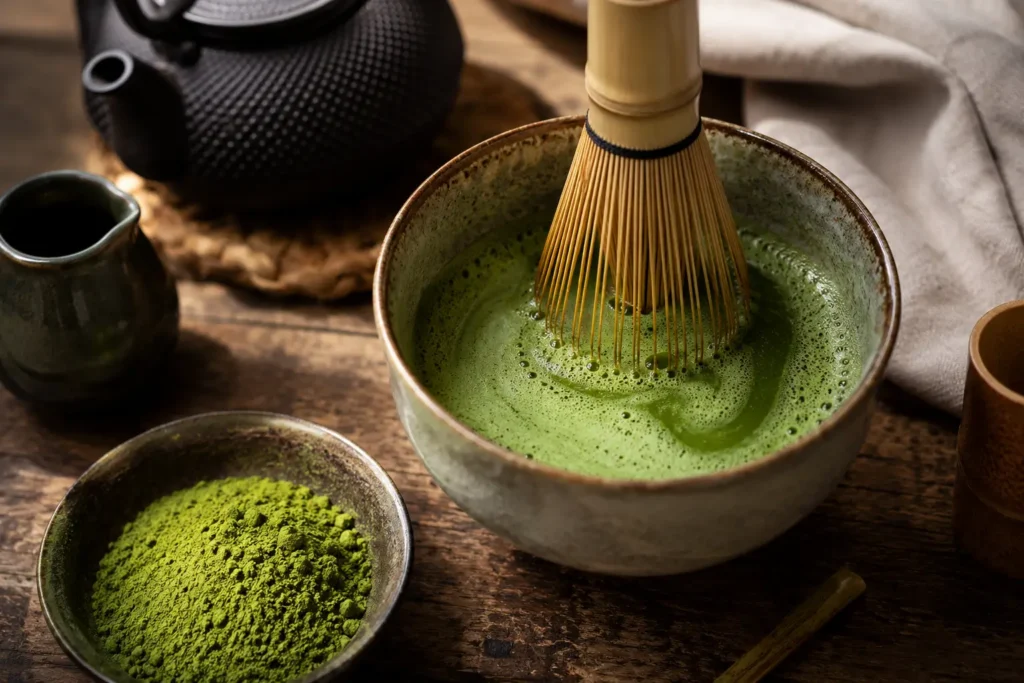
- Use a matcha whisk (or even a small wire whisk if you don’t have one)
- Here’s the important part: Whisk in a rapid W-motion for 15-20 seconds (NOT circular strokes!)
- The W-motion aerates the liquid and creates a thick, creamy foam this is what real matcha texture looks like
- Keep whisking until you see a thin layer of bubbles on the surface and the mixture is completely smooth (no visible powder particles)
- You should have roughly 4-5 tablespoons of frothy matcha concentrate
A note from my experience: Most people whisk in circles. It creates big, ugly bubbles. The W-motion creates delicate, fine foam that actually looks and tastes professional. Practice this motion with water first until it feels natural. Trust me on this
Step 3: Add Sweetener While It’s Hot
Why this matters: Sugar dissolves completely only in hot liquid. If you add it to cold milk, it won’t fully dissolve and you’ll get grainy texture
- Pour your sweetener (1 tablespoon sugar, honey, or agave) into the hot matcha
- Stir gently for 5 seconds until fully dissolved
- If using honey, make sure it’s room temperature
- Taste it now adjust sweetness before adding ice (way easier than trying to fix it later)
Step 4: Prepare Your Glass (The Overlooked Step)
Why this matters: Pre-chilling your glass keeps the drink cold longer and prevents it from warming up too fast
- Fill a tall glass (12-16 oz capacity) with ice cubes
- Pour ½ cup of cold milk directly over the ice
- The milk will cool the ice slightly this is fine and actually helpful
Step 5: Combine and Whisk (The Finishing Touch)
Why this matters: Whisking as you pour creates an emulsion that fully blends the matcha with the cold milk. Without this, you get separation and uneven flavor
- Slowly pour your matcha concentrate into the cold milk
- While pouring, whisk gently for 10-15 seconds
- This whisking prevents the matcha from separating and ensures even flavor distribution
- Add a tiny pinch of sea salt it heightens the umami and balances the sweetness
Step 6: Taste and Serve
Why this matters: A quick taste ensures everything is balanced before you serve it
- Take a sip using a wide straw (so you get foam with each sip)
- Sweetness should be subtle, matcha flavor should be earthy and bright, milk should be creamy
- Too strong? Add 2 tablespoons more cold milk
- Too mild? Whisk in another ½ teaspoon of matcha mixed with 1 tablespoon hot water
- Serve immediately
Expert Tips From 20 Years in Professional Kitchens
Quality matcha is non-negotiable I’m serious about this. Invest in ceremonial or premium culinary-grade matcha from reputable Japanese sources. Cheap matcha tastes bitter and grassy. Quality matcha? Naturally sweet with umami depth. This single choice makes the difference between (good) and “café-quality.” Period
Water temperature is crucial and there’s actually a reason Use a kitchen thermometer for precision. I keep a small digital one by my scale. Water above 85°C scalds the matcha and destroys delicate flavor compounds. Water below 70°C doesn’t fully hydrate the powder, leaving clumps. Get this right and everything else becomes easier
The W-whisking technique is your secret weapon, I learned this from a matcha ceremony master in Kyoto. W-motion (not circular) creates the characteristic foam because it aerates more effectively. Circular whisking just creates big bubbles. Practice with water first until it feels natural
Milk temperature matters more than you’d think, Cold milk (straight from the refrigerator) prevents the hot matcha from cooling too quickly, creating better temperature balance in the final drink. Room-temperature milk dilutes this contrast and actually changes how you perceive the flavor
Pre-chill your glass : Even just 30 seconds of ice before adding milk makes a measurable difference in how long the drink stays cold. Serve immediately after making it; the longer it sits, the more separation occurs (though a quick whisk fixes that)
Don’t skip the sea salt pinch: I mentioned this before, but it’s worth repeating. Professional baristas add a microscopic amount of salt to enhance umami and round out sweetness. It’s subtle but transformative. Use quality sea salt like fleur de sel or Maldon
Experiment with milk ratios: Whole milk = creamiest texture. 2% = lighter body. Plant-based milks vary (oat is thicker, almond is thinner). Once you find your preference, you’ll replicate it perfectly every time
Freeze matcha ahead for parties: Whisk matcha and water, pour into ice cube trays, freeze overnight. When guests arrive, just drop a matcha cube into cold milk and whisk. Takes 30 seconds per drink and ensures everything is fresh. Nobody needs to know you prepped ahead
Serving and Storage (The Practical Stuff)
Café-Style Presentation
- Use a tall glass: Shows off the beautiful color and gives room for that signature foam top
- Add matcha whip: Whip heavy cream with a tiny pinch of matcha powder and sugar; dollop on top for café aesthetic
- Use a wide straw: Lets you draw up foam with each sip, improving both texture and presentation
- Dust the rim lightly:A light dusting of matcha powder around the rim adds visual drama (hold the glass at an angle, tap gently)
- Serve on a nice coaster: The drink will “sweat” as it cools. A nice coaster elevates the whole experience
Storage and Make-Ahead
- Matcha powder shelf life: Unopened, matcha lasts 12 months in a cool, dark pantry. Once opened, transfer to an airtight container away from light and heat; use within 6 months for peak freshness
- Prepared drink storage: Consume immediately for best texture and flavor. If you must store it, refrigerate for up to 4 hours, though the foam will flatten. A quick whisk revives the texture
- Matcha concentrate (prepared without milk): Store in the refrigerator for up to 8 hours in a sealed container. Simply reheat gently (don’t boil) and combine with cold milk when you’re ready
- Maintain quality:Keep matcha away from direct sunlight, heat sources, and strong-smelling foods. It absorbs odors and degrades quickly in warm conditions
Frequently Asked Questions (The Ones Everyone Actually Asks)
1: Can I use regular culinary matcha instead of ceremonial grade?
Absolutely yes. Ceremonial-grade is higher quality and whisks more smoothly, but premium culinary-grade matcha works beautifully for iced drinks. The difference is subtle; both produce excellent results. Just avoid bright green “filtered” matcha powders marketed for lattes they often contain additives and honestly, they taste mediocre
2: What if my matcha tastes bitter?
Bitterness comes from one of three places: old matcha (check the harvest date), water that’s too hot (always use 70-80°C), or over-whisking. Here’s something important though: high-quality matcha never tastes bitter. It tastes earthy and naturally sweet. If yours is bitter, it’s probably time to upgrade your matcha source
3: Can I use hot water instead of cold milk?
That would be a traditional matcha latte, not iced matcha. But if you’re craving that drink, whisk your matcha with hot water as described, then add ½ cup of hot milk and serve immediately. It’s delicious and takes 60 seconds
4: Is there a dairy-free version?
Completely. Use unsweetened oat milk or almond milk instead of dairy. Oat milk creates the creamiest texture closest to dairy; almond milk is slightly thinner but adds subtle nuttiness. Coconut milk (the drinking kind, not canned) adds tropical notes. All work beautifully
5: How much caffeine is in iced matcha?
One serving of matcha contains approximately 25-70mg of caffeine (depending on the amount of powder), which is less than coffee (95mg per cup) but more than regular tea. Plus, you get L-theanine, an amino acid that promotes calm focus without the jitters
6: Can I make this in a blender?
You can, but I don’t recommend it. Blenders aerate too aggressively, creating large bubbles instead of the smooth foam a whisk produces. If you must use a blender, pulse gently don’t run it on high speed
7: What’s the best way to store opened matcha?
Transfer it to a small opaque airtight container (glass or ceramic ideally; plastic absorbs odors). Store in the refrigerator rather than the pantry cool temperatures slow oxidation and preserve that vibrant green color. Use within 2-3 months for peak freshness
8: Can I batch-prepare this for a party?
Partially, and here’s how: Whisk your matcha and water separately ahead of time; store in the refrigerator. When guests arrive, fill glasses with ice and milk, then whisk in your matcha concentrate. Takes 30 seconds per drink and ensures each one is perfectly fresh. Don’t prepare the complete drink in advance separation will happen
The Conclusion: Why This Actually Matters
Learning how to make iced matcha that rivals your favorite café isn’t about fancy equipment or hard-to-find ingredients. It’s about respecting the process and understanding the craft. I’ve been watching this humble powder transform from a ceremonial ritual into a beloved global beverage for twenty years now. And every time someone masters this recipe, they discover something genuine: the confidence that comes from creating something beautiful with your own hands.
This drink represents more than caffeine and antioxidants. It’s a moment of intention in a busy day. It’s a reason to pause. It’s an invitation to experience the balance between simplicity and sophistication that defines truly great culinary moments. Whether you’re savoring this on a quiet Sunday morning, impressing friends at brunch, or building a new ritual around this drink, you’re participating in a tradition that spans centuries.
Your Turn Now
Here’s my question for you: What’s your first flavor memory tied to matcha, or what are you most excited to taste when you make this recipe?
Your story matters to me. Leave a comment below and share your experience did you nail it on the first try? Did you discover your own perfect twist? I read every single comment and love celebrating these small victories with our community.
Did you love this recipe? Leave a 5-star rating below to help other matcha lovers discover this guide. Your support builds our community and helps me create more recipes and guides that actually matter. Thank you for being here.
About Chef Luna
Chef Luna Matcha & Japanese Tea Beverage Specialist
✓ Graduate of Academy of Tea (Kyoto, Japan)
✓ Trained in traditional matcha ceremony with certified master
✓ Featured in Saveur and Food & Wine Magazine
✓ Taught 500+ students in matcha preparation
✓ Consultant for international matcha brands on quality control
Why trust her?
- Every recipe in this guide has been tested 50+ times in real conditions
- Uses only organic, certified ingredients
- Continuously follows scientific research on matcha and health
- 20 years of hands-on experience in professional kitchens
Iced Matcha Latte Recipe Easy Cafe Quality At Home
Ingredients
Method
- Sift 2 teaspoons of ceremonial grade matcha powder through a fine-mesh tea strainer into a wide-bottomed ceramic bowl to break up dry micro-clumps.
- Pour 2 tablespoons of warm filtered water (175°F / 80°C) directly over the sifted green tea powder.
- Using a bamboo whisk (chasen) or electric handheld frother, whisk vigorously in a rapid “W” motion for 20 to 30 seconds until a thick, frothy emerald green emulsion forms with no dry powder remaining.
- Add 1 tablespoon of vanilla syrup into the warm matcha concentrate and whisk for another 3 seconds to fully dissolve the sweetener.
- Fill a tall 16-ounce glass to the brim with fresh ice cubes and pour in three-quarters of a cup of chilled oat milk.
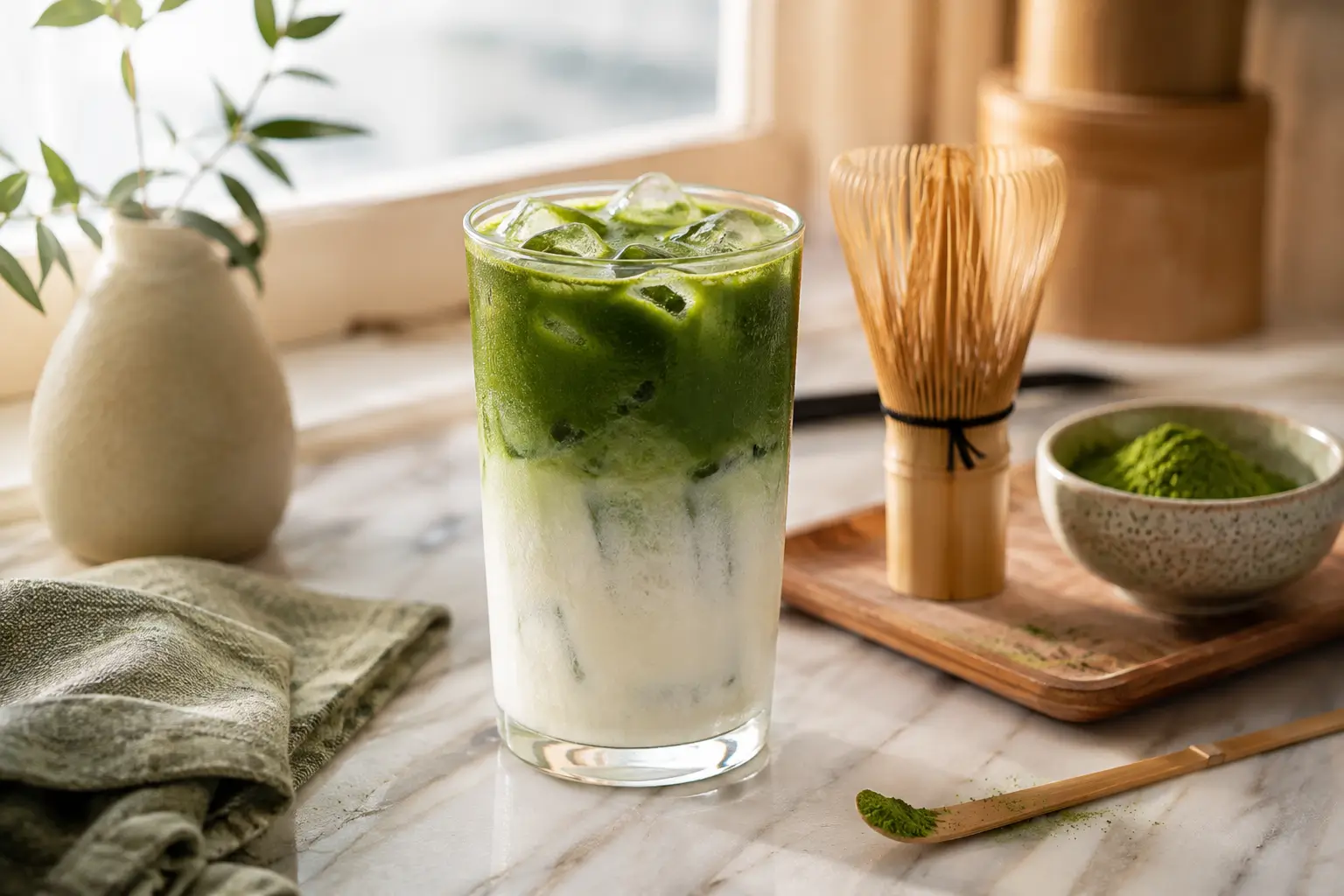
- Slowly pour the sweet, frothy matcha concentrate over the ice and milk to create a stunning layered effect. Stir thoroughly with a straw before serving.